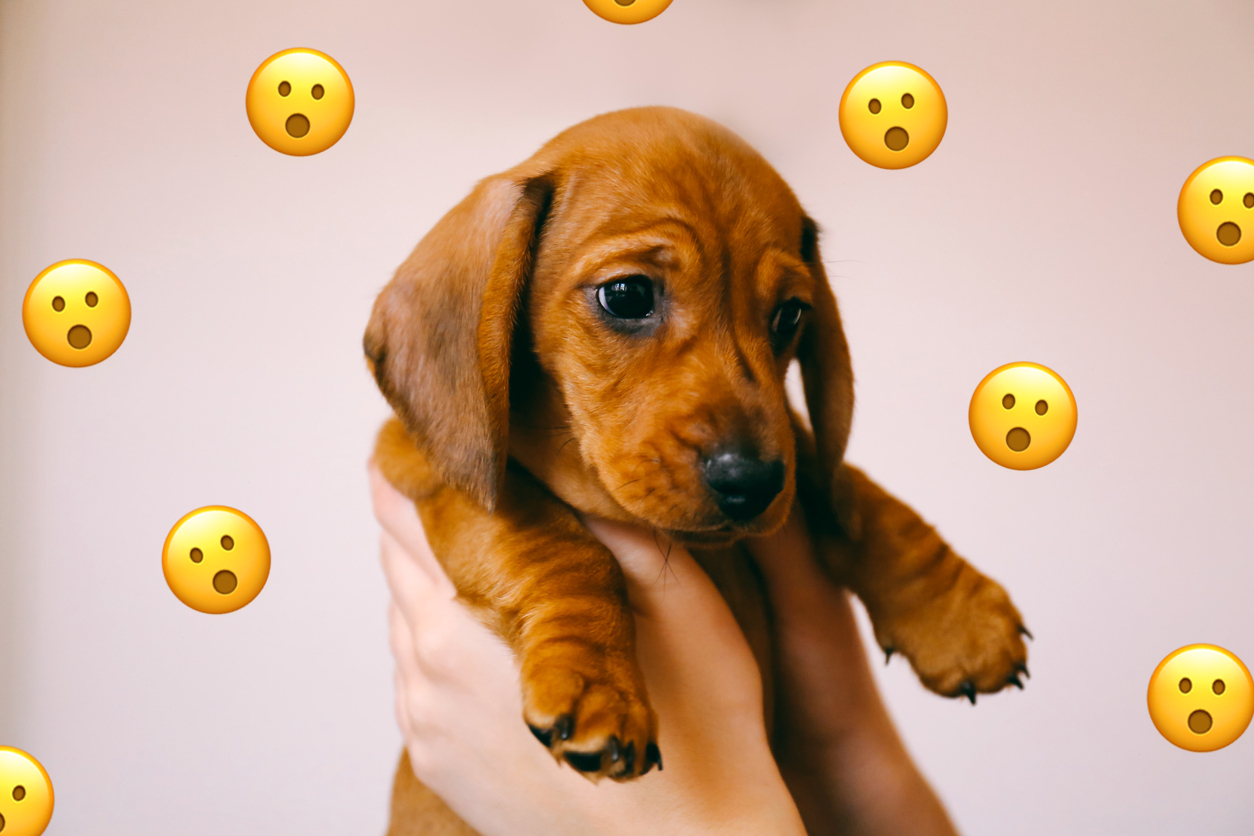

Yes, you read that right. There’s a reason why the phrase “so cute I want to eat it up” exists, and that mostly applies to puppies and other adorable animals (and yes, also human babies). Would you ever actually eat a puppy? We would hope not. But, there’s actually a scientific reason why when we see something cute, we respond in such a strange way.
It’s called “cute aggression,” and it deals with how the neurons in our brain fire after we see something super cuddly. Katherine Stavropoulos, who works as a special education professor at the University of California, Riverside, conducted a study so that we could possibly learn even more.
The study itself sounds like it was a lot of fun. Stavropoulos recruited 40 participants of varying ages, and literally studied their brain activity when presented with an adorable image. Just imagine being able to look at kittens and puppies in the name of science!
Here’s what she found out. The participants were a lot more cute-aggressive towards pictures of baby animals in comparison to adult animals, which are often seen as “less cute.” (I personally disagree, but hey — it’s her study.) It also seems like those “so cute I want to eat you up” feelings were much more common towards animals than actual human babies that hadn’t been altered to look just slightly more darling. Perhaps because we know that human babies require diapers, and often cause you to lose sleep. Hence, less delicious.
The other interesting news is that cute aggression doesn’t happen because we actually want to cause harm to the person or animal that’s currently charming us. In fact, just the opposite.
Stavropoulos further claimed that it’s our caregiving instinct at play. “From an evolutionary perspective, a human’s ability to respond to the cuteness of an infant or animal triggers innate processes for caregiving, known as the baby schema,” the study reads. “…Moreover, the appearance of cuteness has also elicited caretaking behaviors among adults, even before becoming parents.”
So, don’t worry. It’s totally normal to keep looking at photos of your cute new pup. Just know that your feelings are all connected to the activity in your brain, and biology has played quite a part in making you find things so aggressively cute.