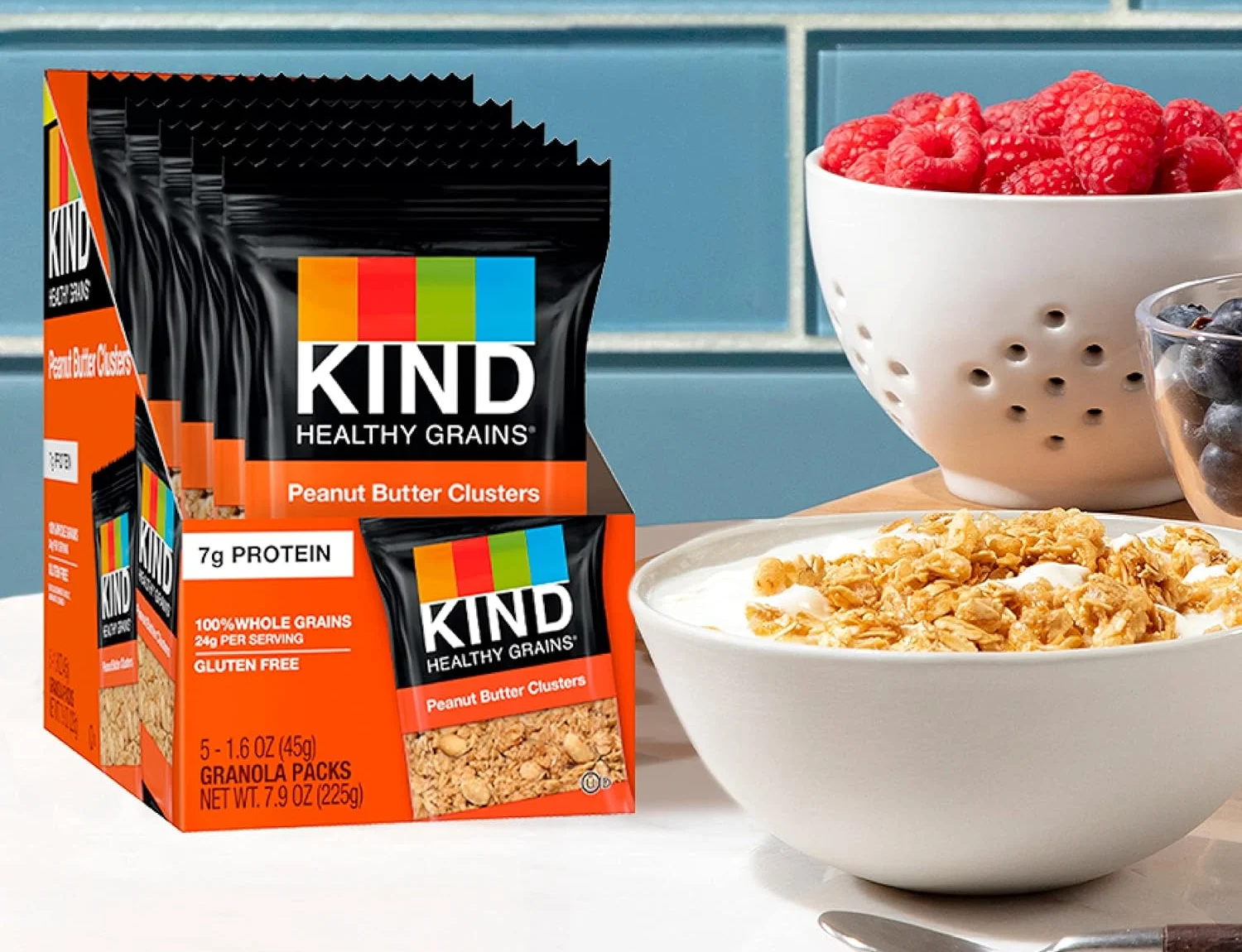

When it comes to comparing popular snack options, Kind Granola Bars take center stage. This article will take an in-depth look at the key aspects of Kind Granola Bars, exploring their price, nutritional value, ingredients, flavor, packaging, allergen information, certifications, protein content, fiber content, and customer reviews. Whether you’re a fan of peanut butter goodness or crave the satisfying crunch of cranberry almond, So Yummy is here to help you decide on your next snack choice.
KIND Granola Clusters, Peanut Butter
For
- Good source of fiber
- High protein content
- Made with 5 super grains
- Creamy peanut butter flavor
- Convenient packaging for on-the-go
Against
- Slightly more expensive per unit
- Contains allergens like peanuts
- It may be too sweet for some
- Lower fiber content than bars
- Limited flavor options
KIND Granola Bars, Cranberry Almond
For
- Nutritionally dense
- Heart-healthy almonds
- Individually wrapped for portability
- Satisfying crunch
- Balanced sweetness
Against
- Slightly lower protein content
- Not as high in fiber as granola
- It may contain allergens like nuts
- Less variety in ingredients
- Some find them too chewy
Comparing Price

In terms of price, the KIND Granola Clusters, Peanut Butter, are $23.99 for a 20-count pack, while the KIND Bars, Cranberry Almond, are $14.22 for a 12-count pack. The former is slightly more expensive per unit than the latter, which costs approximately $1.20 per pouch, whereas the latter comes to around $1.19 per bar.
KIND Granola, Peanut Butter
KIND Cranberry Bars
Nutritional Value Comparison
When looking into nutritional value, the peanut butter clusters offer a good source of fiber and pack 7g of protein per serving. It contains five super grains like oats, buckwheat, millet, amaranth, and quinoa, providing a wholesome and satisfying snack option.
The KIND Bars and Cranberry Almonds are nutritionally dense, making heart-healthy almonds the primary ingredient. With 4 grams of protein and a great source of healthy fibers, these bars offer a well-balanced snack with a low glycemic index.
KIND Granola, Peanut Butter
KIND Granola Bars, Cranberry
Let’s Check the Ingredients

The quality and source of ingredients used in a product play a crucial role in determining its overall nutritional value and health benefits. KIND Granola Clusters are made with five super grains including oats, buckwheat, millet, amaranth, and quinoa. These whole grains provide essential nutrients and fiber, making them nutritious snacks. The cranberry almond KIND Granola Bars lead with heart-healthy almonds as the #1 ingredient, offering a good source of protein and healthy fats.
KIND Granola, Peanut Butter
KIND Granola Bars, Cranberry Almond
Flavor Comparison
Both KIND Granola options offer unique taste experiences. The clusters feature a creamy and rich peanut butter flavor that is both delicious and satisfying. The combination of oats, buckwheat, millet, amaranth, and quinoa creates a nutty and wholesome taste profile that complements the sweetness of the peanut butter. The cranberry almond bars are slightly less indulgent, but seem a bit healthier and lighter on the tummy. They are both delicious!
KIND Granola, Peanut Butter
KIND Granola Bars, Cranberry Almond
Packaging Comparison

The packaging of KIND Granola, Peanut Butter Clusters, is designed for convenience and portability. Each 1.6-oz pouch is easy to grab on the go, making it ideal for a quick breakfast or mid-day snack. KIND Granola Bars in Cranberry Almond come in a 1.4 oz bar format, which is also convenient for snacking. The bars are individually wrapped, making them easy to carry in a bag or purse.
KIND Granola, Peanut Butter
KIND Cranberry Almond Bars
Allergen Information
Consumers must be well-informed about potential risks associated with consuming these products. KIND Granola Peanut Butter Clusters are gluten-free, making them suitable for individuals with gluten sensitivities or celiac disease. Additionally, these clusters do not contain any known allergens, such as tree nuts, soy, or dairy, providing a safe snacking option for many individuals. The cranberry almond bars also contain nuts, but are gluten-free as well.
KIND Granola, Peanut Butter
KIND Granola Bars
Certifications

Both KIND products offer a range of certifications to cater to different dietary needs and preferences. KIND Granola Clusters, Peanut Butter stands out with its Gluten-Free, Non-GMO Project Verified, and 100% whole grains certification. These certifications ensure that the product suits those with gluten sensitivities and aligns with non-GMO preferences.
KIND Bars, Cranberry Almond, also boasts Gluten-Free certification and is made with non-genetically modified ingredients. This certification assures consumers looking for a snack that is kind to their bodies and dietary restrictions.
KIND Granola, Peanut Butter
KIND Granola Bars, Cranberry Almond
Protein Content Comparison
When choosing between KIND Granola, Peanut Butter, and KIND Bars, Cranberry Almond, one crucial aspect to consider is their protein content. The KIND Granola Clusters, Peanut Butter clusters provide 7g of protein per serving, making it a good source of the essential protein nutrients.
Alternatively, the KIND Bars, Cranberry Almond, offer 4 grams of protein per serving. While this is slightly lower than the protein content in the granola clusters, it still provides a decent amount of protein for a snack option.
KIND Granola Clusters
KIND Granola Bars
What About Fiber Content?

Looking at the fiber content of the products, KIND Peanut Butter provides 7g of fiber per serving. This significantly contributes to a healthy digestive system and helps you feel full for more extended periods. KIND Granola Bars, Cranberry Almond, offer 4 grams of fiber per bar. While this is a respectable amount, it falls slightly short of the fiber content of the peanut butter granola.
KIND Granola, Peanut Butter
KIND Bars, Cranberry Almond
Evaluating Customer Reviews
Feedback and reviews from customers who have purchased the product play a crucial role in evaluating the quality and satisfaction level of KIND Granola Bars. Let’s delve into the customer reviews for both products to understand their strengths and weaknesses.
Starting with KIND Granola, Peanut Butter, this product has received over 50 Amazon customer reviews. Customers appreciate the delicious and creamy peanut butter flavor in each bite. The 100% whole grain clusters have been praised for their texture and flavor, making them a popular choice among consumers.
KIND Granola Bars, Cranberry Almond, has garnered an impressive 11,792 reviews on Amazon. Many customers rave about the nutritionally dense composition of these bars, with heart-healthy almonds as the primary ingredient. The satisfying crunch and balanced sweetness have earned high praise from users.
KIND Granola, Peanut Butter
KIND Cranberry Almond Bars
Final Decision: Choosing Between Peanut Butter Clusters and Cranberry Almond Bars
In this conclusion, we happily declare KIND Granola Bars, Cranberry Almond as the preferred choice for the following reasons: nutritionally dense composition with heart-healthy almonds as the primary ingredient, satisfying crunch, balanced sweetness, and portability. However, both options are satisfying, filling, healthy, and tasty. So, you really can’t go wrong with KIND products; try them out today!
Questions & Answers:
Question: What nutritional value do KIND Granola, Peanut Butter, and, KIND Bars, Cranberry Almonds offer?
Answer: The KIND Granola Peanut Butter offers a good source of fiber and packs in 7g of protein per serving, while the KIND Bars Cranberry Almonds are nutritionally dense, leading with heart-healthy almonds as the primary ingredient.
Question: What are the main ingredients in KIND Granola, Peanut Butter and KIND Bars, Cranberry Almond?
Answer: KIND Granola Peanut Butter is made with five super grains, including oats, buckwheat, millet, amaranth, and quinoa, while KIND Bars lead with heart-healthy almonds as the #1 ingredient.
Question: What are the packaging differences between KIND Granola, Peanut Butter and KIND Bars, Cranberry Almond?
Answer: KIND Granola Peanut Butter comes in 1.6-oz pouches designed for convenience, while KIND Bars and Cranberry Almonds are individually wrapped 1.4-oz bars that are easy to carry.
Question: What certifications do KIND Granola, Peanut Butter and, KIND Bars, and Cranberry Almonds have?
Answer: KIND Granola Peanut Butter is Gluten-Free, non-GMO Project Verified, and 100% whole grains certified. KIND Bars and Cranberry Almonds are also Gluten-Free and made with non-genetically modified ingredients.
Question: How do the protein and fiber contents of Peanut Butter Clusters and Cranberry Almond Bars compare?
Answer: KIND Granola with peanut Butter provides 7g of protein and fiber per serving, while KIND Bars with cranberry Almonds offer 4g of protein and fiber per bar.

