The Flavor Vault: Unlock The Power of a Bacon Grease Container
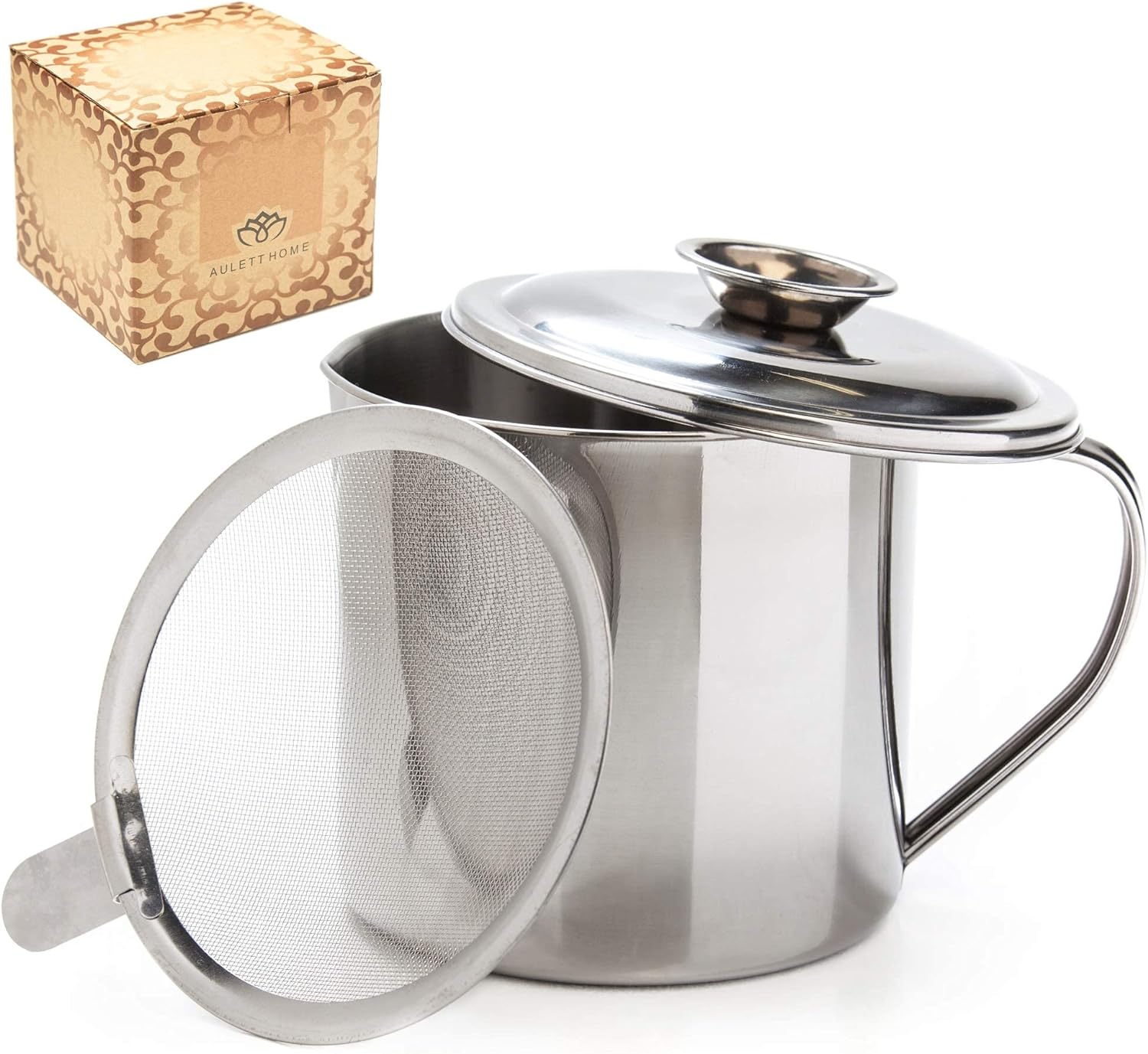

The Aulett Bacon Grease Container is a stainless steel kitchen designed to store fats, cooking oil, and drippings. With its ergonomic design and practical features, this grease keeper is a must-have tool for any home cooking enthusiast.
I recently purchased the Aulett Grease Container and have been thoroughly impressed with its quality and functionality. The sturdy construction and optimal capacity make it ideal for storing bacon grease and cooking oil.
The built-in strainer is easy to clean and effectively separates particles, ensuring clean and flavorful drippings for future use. It has truly elevated my cooking experience by infusing rich bacon flavor into various dishes like eggs and popcorn.
A Journey Through Time: Storing Bacon Fat
Throughout history, the preservation of bacon fat has been a culinary tradition deeply rooted in various cultures. Dating back to ancient civilizations, such as the Romans and the Chinese, bacon was a prized commodity, and its rendered fat was treasured for its versatility and flavor enhancement in cooking.
In medieval Europe, bacon fat, known as lard, became a household staple for cooking and baking. It was meticulously stored in ceramic pots or wooden barrels, safeguarding its rich taste for extended periods. As trade expanded, bacon fat gained prominence worldwide, finding its way into diverse cuisines and culinary practices.
During times of scarcity and hardship, the practice of rendering and storing bacon fat became essential for survival. Pioneer settlers in North America utilized every part of the pig, including its fat, which was rendered and stored in jars or crocks. It served as a valuable source of calories and flavor in their rustic kitchens.
In the early 20th century, the tradition of storing bacon fat somewhat waned with the rise of convenience foods and industrialization. However, it experienced a resurgence in recent years, driven by a renewed interest in traditional cooking methods and sustainability. Today, bacon fat is cherished by chefs and home cooks alike, who appreciate its ability to impart a unique smoky essence to dishes while reducing food waste.
In essence, the history of storing bacon fat reflects not only the evolution of culinary practices but also the resourcefulness and ingenuity of humankind in preserving flavor and nourishment through the ages.
Ergonomic Design for Comfortable Handling

The Aulett Home bacon fat container boasts an ergonomic design that prioritizes comfortable handling and heat prevention. Users can confidently grip the container with a curved and secure handle while reducing heat transfer. This feature makes it ideal for storing bacon grease, cooking oil, and drippings. The container’s specialized design ensures a secure and comfortable user experience, setting it apart as a versatile kitchen tool.
Bacon Grease Container: Infuse Flavors with Ease

Elevate your culinary creations with the Aulett Home bacon fat container that allows you to infuse flavors easily. After frying your favorite bacon, utilize the built-in oil strainer to collect excess fat and enhance the taste of various dishes. Whether adding a rich bacon flavor to popcorn, eggs, or other recipes, this container enables you to capture the essence of bacon and create delicious and flavorful meals effortlessly.
Bacon Grease Container: Classic Design for Practicality

Experience the efficiency of the Aulett Home bacon fat container’s classic design, combining functionality and practicality. The hidden strainer efficiently separates particles, while the convenient spout ensures mess-free pouring.
The lid neatly covers the mesh screen and canister, maintaining a clean and organized kitchen space. This timeless design ensures that the container is a reliable and essential tool for storing fats, cooking oil, and drippings.
Bacon Grease Container: Optimal Capacity and Durability

With its optimal capacity and durable stainless steel construction, the Aulett Home bacon fat container offers the perfect solution for your culinary needs. Holding up to 5 cups of fat straight from the pan, this container serves as both a grease strainer and a cooking oil filter, allowing you to preserve and reuse drippings effectively. Its robust build ensures long-lasting durability, making it a must-have tool for any cooking enthusiast seeking convenience and efficiency.
Must-Have for Healthy Cooking Enthusiasts

The Aulett Home bacon fat container is a must-have for individuals passionate about healthy cooking. This stainless steel grease keeper promotes a healthy and flavorful approach to meal preparation and is ideal for storing fats for keto and paleo diets, cooking oil, and drippings. Elevate your culinary journey and maintain a conscious and nutritious cooking style with this essential kitchen accessory that enhances the taste and quality of your dishes.
Pros:
- Durable Construction: Made of stainless steel, the Aulett Bacon Grease Container offers excellent durability, ensuring it can withstand frequent use without rusting or corroding. This longevity provides value for money as it reduces the need for frequent replacements.
- Effective Grease Storage: The container effectively stores bacon grease, cooking oil, and drippings, preventing them from creating a mess in the kitchen or being wasted. Its tight-sealing lid helps preserve the stored grease’s freshness, maintaining its quality for longer periods.
- Ergonomic Design: With its user-friendly design, including a comfortable handle and a spout for easy pouring, the Aulett Bacon Grease Container enhances convenience during cooking. Its compact size also makes it easy to store in kitchen cabinets or drawers without taking up much space.
Cons:
- Limited Capacity: Some users may find the container’s capacity to be insufficient for their needs, especially if they frequently generate large amounts of grease or cooking oil. This could result in the need for frequent emptying, which might be inconvenient.
- Cleaning Challenges: While stainless steel is generally easy to clean, the container’s design may present challenges when thoroughly cleaning the interior, particularly around the edges and corners. This could lead to residual grease buildup over time, potentially affecting the container’s hygiene.
- Potential for Leakage: Despite its tight-sealing lid, leakage’s still possible, especially if the container is accidentally knocked over or not securely closed. This could result in grease spilling onto countertops or floors, creating a mess that requires cleaning up.
Conclusion
In conclusion, the Aulett Grease Container has exceeded my expectations in terms of durability, practicality, and convenience. Its classic design and efficient features make it a valuable addition to any kitchen, seamlessly integrating into both modern and traditional cooking spaces.
By providing a reliable method for storing bacon fat and other cooking oils, this grease keeper not only preserves flavor but also promotes a sustainable and healthy approach to meal preparation. I highly recommend the Aulett Grease Container to anyone looking to elevate their culinary endeavors and maintain a conscious approach to kitchen practices.
Questions & Answers:
Question: Is the Aulett Home Bacon Fat Container easy to clean?
Answer: Yes, the metal jug is lightweight and easy to clean. The strainer can be washed, dried, and easily replaced on the jug.
Question: How much bacon grease can the container hold?
Answer: The container can hold up to 5 cups (1.25 quarts or 40 fl oz) of fat straight from the pan.
Question: Is the Aulett Home Bacon Fat Container suitable for storing cooking oil for healthy cooking?
Answer: Yes, the stainless steel grease keeper is great for storing fats for keto and paleo, cooking oil, and drippings, making it perfect for maintaining a healthy and flavorful approach to your meals.