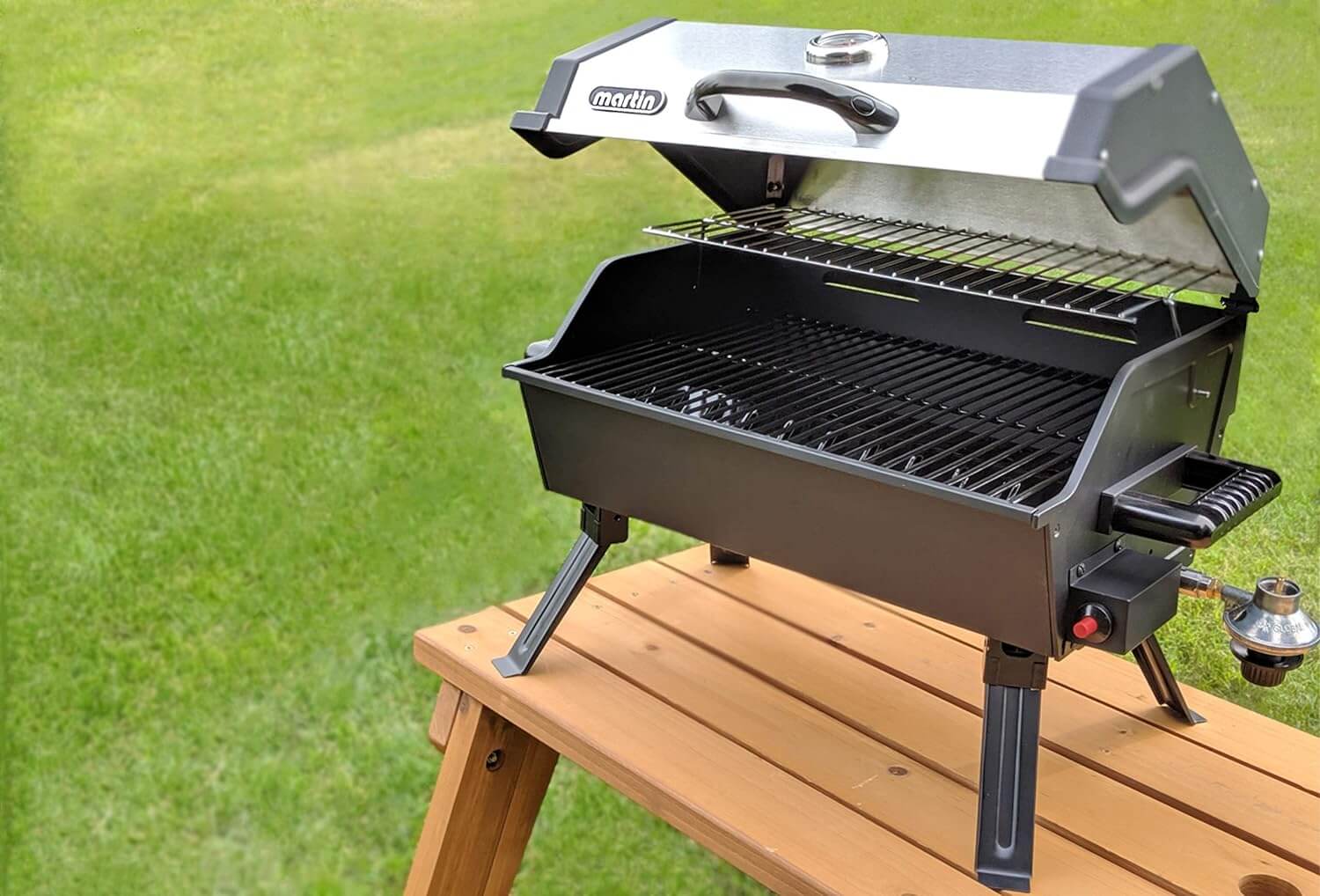

When it comes to outdoor cooking, having a reliable and efficient grill can make all the difference. The Martin Portable Propane BBQ Grill has quickly become a favorite among camping enthusiasts and backyard grill masters alike.
In this review, we’ll dive into the features, benefits, and user experiences that make this grill a top choice for outdoor cooking, whether camping, picnicking, or simply enjoying a family gathering in your backyard.
I recently purchased the Martin Portable Propane BBQ Grill for a family camping trip and was thoroughly impressed. The grill’s compact and foldable design made it easy to transport and set up at our campsite.
One of my standout features was the built-in thermometer, which allowed for precise heat control. I could sear steaks to perfection and even slow-grill chicken without any issues. The 237.25 sq. inch cooking area was enough to prepare meals for our entire group.
Portability and Design

The MARTIN Portable Propane BBQ Grill is designed with portability in mind. It features foldable legs, making it easy to transport and set up wherever you go. Whether camping, picnicking, or having a family gathering, this grill’s compact design ensures that it can fit into small spaces in your vehicle or storage area. Additionally, its lightweight construction allows you to carry it without much effort, making it a perfect companion for outdoor adventures.
Heat Control and Built-in Thermometer

One of the standout features of this grill is its built-in thermometer, which provides precise heat control. This allows you to easily sear steaks to perfection, slow-grill chicken, and even toast bread and veggies. The thermometer ensures you maintain the ideal cooking temperature, giving you consistent results every time you grill. This feature is handy for those passionate about achieving the perfect cook on their food.
Cooking Versatility

The MARTIN Portable Propane BBQ Grill offers remarkable versatility in its cooking capabilities. With 237.25 square inches of cooking space, you can bake, grill, smoke, roast, and braise various dishes. This makes it suitable for preparing meals for the entire family. Whether you’re in the mood for a smoky barbecue or a slow-roasted meal, this grill has the functionality to meet all your outdoor cooking needs.
High Output Performance

Equipped with a powerful 14,000 BTU burner, this grill is designed to tackle all your cooking requirements. The high output ensures that the grill heats up quickly and maintains high temperatures, allowing you to cook efficiently. This is especially beneficial when grilling for a large group and preparing multiple dishes simultaneously. The grill performs consistently, providing evenly cooked food using high, medium, or low heat settings.
Ease of Assembly and Cleaning

Users have praised the MARTIN Portable Propane BBQ Grill’s easy assembly process. Most find that they can set it up in a short amount of time without any complications. Additionally, the grill is designed for easy cleaning. The grate and diffuser are dishwasher safe, and the overall construction allows straightforward maintenance. Keeping the grill clean ensures its longevity and optimal performance over time.
Durability and Build Quality

While the grill is made from lightweight materials, it is constructed to be durable and withstand regular use. The stainless steel design adds to its aesthetic appeal and enhances its resistance to rust and weather conditions. However, keeping the grill clean and storing it properly is essential to prevent any potential wear and tear. Overall, the build quality is commendable for a grill in this price range.
User Experience and Customer Support

Customers have reported positive experiences with the MARTIN Portable Propane BBQ Grill. Many appreciate the manufacturer’s prompt and friendly customer support, which addresses any queries or issues within 48 hours. This level of service adds value to the purchase and assures users that they are supported throughout the product’s lifespan. User reviews highlight satisfaction with the grill’s performance and the overall grilling experience it provides.
Compact Size and Storage

The compact size of the MARTIN Portable Propane BBQ Grill makes it ideal for users with limited space. Whether using it on a small balcony or packing it for a camping trip, the grill’s space-saving design is highly convenient. The foldable legs and lightweight construction further enhance its portability and ease of storage. This makes it an excellent option for those who need a reliable grill without the bulk of larger models.
Temperature Consistency
Users appreciate the grill’s ability to maintain consistent temperatures. Despite its compact size, it provides even heat distribution, ensuring food is cooked thoroughly and evenly. Some users have noted that the center of the grill tends to be hotter than the edges, but this can be managed by adjusting the cooking positions and using the warming rack effectively. Overall, the temperature consistency contributes to a satisfying grilling experience.
Value for Money
Considering its features, performance, and build quality, the MARTIN Portable Propane BBQ Grill offers excellent value for money. Priced at $181.50, it provides a range of functionalities that cater to various cooking styles and needs. The positive user reviews and high ratings further attest to its value, making it a worthwhile investment for anyone looking to enhance their outdoor cooking experiences. Its portability, versatility, and performance make it a top choice.
Pros:
- Easy to install and clean
- Portable and foldable design
- Versatile cooking options
Cons:
- It runs hot in the center
- Thin material construction
- Some parts may be missing
Conclusion
In conclusion, the Martin Portable Propane BBQ Grill is a versatile and powerful option for anyone needing a reliable outdoor grill. Its high output, precise heat control, and portability make it ideal for various cooking needs.
Whether you’re an avid camper or just looking for a convenient grill for your backyard, this Martin grill offers excellent value for its price. With a high user rating and numerous positive reviews, it’s clear that this grill is a solid investment for outdoor cooking enthusiasts.
Questions & Answers:
Question: Is this grill suitable for camping?
Answer: Yes, the MARTIN Portable Propane BBQ Grill is designed with foldable legs and is ideal for camping, picnics, and other outdoor activities.
Question: Can this grill be used with a 20lb propane tank?
Answer: Yes, you can use this grill with a 20lb propane tank by using an adapter that screws onto the tank.
Question: Does the grill come with a built-in thermometer?
Answer: Yes, the grill has a built-in thermometer for precise heat control.