Your Grocery Bill Is Going To Go Way Up For A Horrible Reason
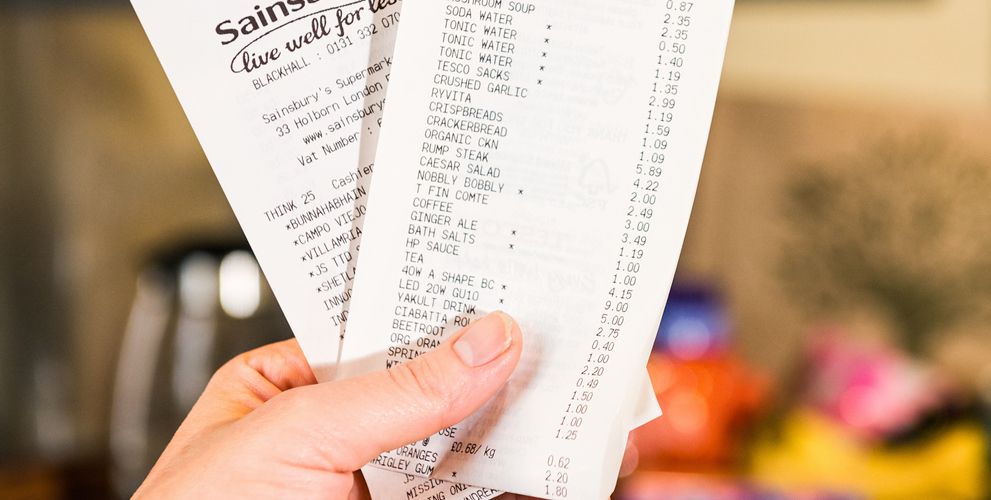

If you already resent how much of your money goes towards food, prepare to get frustrated all over again. The United States Department of Agriculture (USDA) just released a report showing yet another impact of climate change — and you’ll be footing at least some of the bill. In addition to increasing the occurrence of extreme temperatures and phenomena such as floods, droughts and heatwaves, which are already being seen across the continent of Africa, climate change can affect crop yields here in the US. Specifically the USDA’s study looked at how corn, soybeans and winter wheat would be impacted by rising rates of greenhouse gas emissions.
It has a twofold impact. First of all, fewer crops means shortages, which means the prices you see on shelves will likely go up. And the second increase we could see is on our tax bill. At the moment, the USDA pays $12 billion a year to programs like the Federal Crop Insurance Program (FCIP) and the Agriculture Risk Coverage (ARC), which help subsidize and support farmers whose crops have failed or produced a lower-then-expected yield.
#Farming can be unpredictable but the federal #cropinsurance program provides a reliable safety net that benefits #farmers and taxpayers alike. Find out why crop insurance matters to YOU: https://t.co/ybaWnsVdaM
— Idaho Barley Commission (@idahobarleycom) July 12, 2019
See how #cropinsurance affects Idaho: https://t.co/fQKVUk18wu pic.twitter.com/DVJsXdDFXs
For their study, the USDA looked at two different scenarios based on different levels of climate change. In the worst case scenario, which took into account higher rates of greenhouse gas emissions, the cost of supporting farmers increases by 22 percent. Even in the optimistic version of events, with moderate greenhouse gas emissions, costs increased by 3.5 percent. And those are both imagining that farmers had somehow found ways to adapt: in scenarios where farmers continued without any alterations, the cost for the moderate rate of emissions rose by 10 percent, and for the higher emissions it increased by 37 percent.
Reports like this have people calling for politicians who have been skeptical of climate change to listen to scientists.
It was reported that in 2017, Trump administration officials had refused to publish a comprehensive plan designed to help farmers adapt to climate change.
Farmers across the US are grappling with the effects of climate change — yet this administration's @USDA has settled on a strategy of ignoring the climate crisis.https://t.co/bN0z3XPgD7
— Friends of the Earth (Action) (@foe_us) July 26, 2019
This sparked outrage:
I can understand that an old man, who needs to please a lot of lobbies, pretends not to believe in #climatechange.. but how can Americans accept that Trump buries the climate report? This is the future of all of us! @realDonaldTrump I'm with @KHayhoe https://t.co/CkoVB7okBS
— AlessandroIlBello (@lo_splendido) November 28, 2018
And backlash from within Congress:
The administration continues to bury evidence of climate change. They’re blocking critical action to make sure we’re prepared for the future. In this case, farmers and ranchers are being put directly at risk. We can’t bury our heads in the sand anymore. https://t.co/2LQYAPlj6Y
— Rep. Alan Lowenthal (@RepLowenthal) July 21, 2019
Meanwhile farmers are already feeling the impact of climate change.
This may be the most compelling documentary I’ve seen. And not because it’s from us. It’s short... 23 mins. Upon watching you will feel the hardship and challenges faced by farmers as climate intersects with other complicated factors. Great job @CBSNews - https://t.co/fEYLXErz6y
— Jeff Berardelli (@WeatherProf) July 27, 2019
And people are seeing the writing on the wall:
And making their own predictions.
My prediction: Fake foods will dominate the market because it is cheap and the cost of real foods will rise due to climate change
— daswagger (@ItzTheShire) July 25, 2019
This year has already seen a number of climate change protests around the world.
Earlier in 2019, Greta Thunberg protested outside of Sweden’s Parliament to bring attention to climate change. That inspired youth climate strikes around the world. See photos from protests that took place in March. https://t.co/78HMrcNF7z
— The New York Times (@nytimes) July 29, 2019
And it seems like every week there’s a new study trying to find out what could be coming:
For some people, it feels like the end of the world.
Especially since these changes have been shown to be irreversible:
R.E.M. wrote a song with the words "it's the end of the world as we know it" released in 1987. Thirty two years ago, now it's time to truncate it down to just "it's the end of the world" however you know it. What can be done about climate change? For the most part nothing. pic.twitter.com/qbBntzHoV8
— ✝️Watch and Pray. He's Coming!⬆️ (@griffdjohnson) July 23, 2019
Although some people appreciate the motivational push of an incoming deadline..
Others are less thrilled:
stg if I’m working THIS hard for my future and the world ends because of climate change imma be PISSED
— samantha ryan (@SamanthaRWebb) July 27, 2019
This isn’t an instant death sentence — but it is yet another flashing red warning that we need to act now.
There’s no time like the present to save the world.