These Are The Best Cookies To Bake When It’s Cold Outside — I’ll Fight You On It
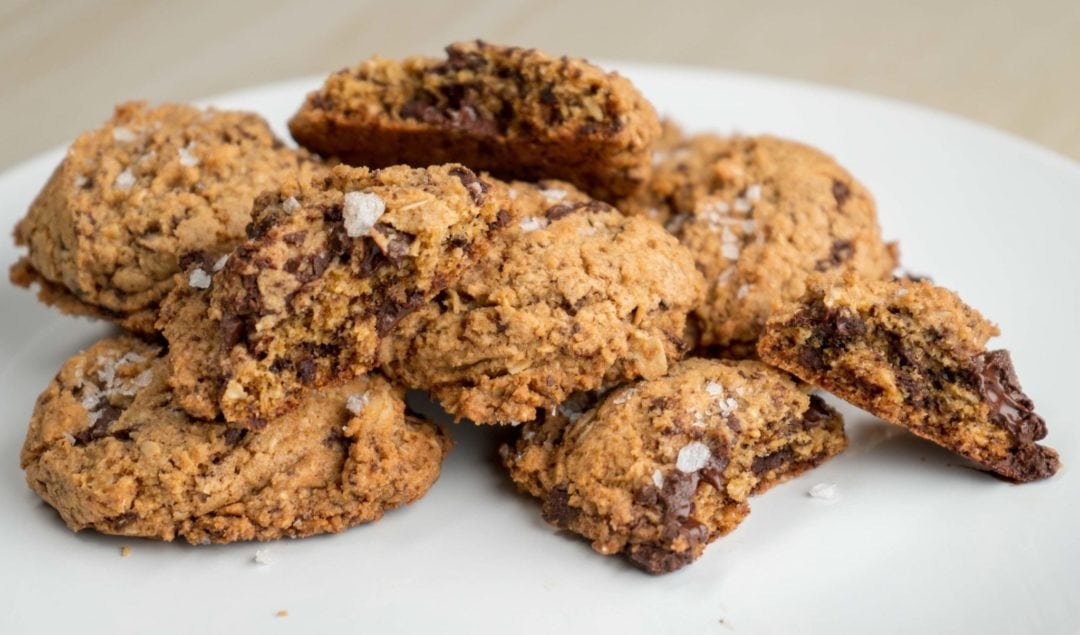

I’ve been on the hunt for the best cookies to kick off the fall season — and since the weather never changes here in Los Angeles, I needed a little extra help with getting into the holiday spirit. As it turned out, one of our very own So Yummy producers, Katie, was baking up a brown sugar-scented storm in the kitchen exactly when I needed some autumn inspo.
The office smelled amazing, and I even got to taste-test these babies fresh out of the oven. I took that first bite and mentally threw all of my previous research out the window. I begged her to share the recipe with me because these cookies are a best-kept secret I believe everyone should know about.
There’s the saying that there’s nothing better than your grandmother’s cooking, and this recipe does not disappoint. Before I tried to tackle baking these myself, I asked Katie a few questions to get an idea of where this recipe came from. The little note card she was working off of was written in her grandmother’s handwriting, and at the top, I noticed the title “Great Depression Cookies.” I had so many questions; like, was this a recipe that her grandmother actually baked during the Great Depression? Or, are these just the best cookies to have on hand when you’re having the worst day of your life? Either way, I was intrigued.

So Yummy
In case you were wondering, these cookies were in fact baked back in the 1930s, during the Great Depression, but they were actually concocted by her grandmother’s mother.
So cool, right?! I love recipes that are backed by a rich family history.
Here’s a pro tip from Katie herself: Pair these cookies with a warm cup of tea and any of the Harry Potter books. With this tip, and many more, I was ready to give this recipe a shot. As a baking novice, here’s how it all went down…
When I read the recipe, I truly thought that brown butter was something I could buy at the grocery store. Boy, was I wrong.
Browning butter is what makes regular butter taste even more delicious (who knew that was even possible?!). This process took me a few tries to get right, only because my baking skill level goes as far as taking Tollhouse cookie dough out of the fridge, putting it on a baking sheet, and calling it a day. This is also the only step that takes the longest to do, in my opinion, but the payoff for amazingly delicious cookies is more than worth it.
My first mistake was using a normal frying pan to brown my butter. I thought a pan was a pan and that there wouldn’t be a huge difference between a saucepan and a frying pan — spoiler alert: THERE IS. So make sure you’re working with a saucepan that’s deep enough for you to get your whisking action on.

So Yummy
I learned that starting out at a medium heat is best. In my final attempt, I let the pan heat up for about a minute before I added in my sticks of butter. I like to think of this as preheating the oven; you wouldn’t put your cookies in while it’s still cold and let the oven heat up as they bake, so why do that when heating up your saucepan?
Once the butter is melted, start to pick up speed in whisking. Keep doing this until you see some brown specks form at the bottom. These should show up within 2-3 minutes of whisking, depending on what level the heat is at. You’ll know you’re getting there when you start to smell a really delicious, nutty flavor. Just a heads up: I smelled like brown butter even when I went to bed that night. But is that really such a horrible thing?

So Yummy
Another pro tip from Katie: Putting your brown butter in the freezer and letting it chill for about 45 minutes is what will really help it firm up. You will then need to stir it when you take it out of the freezer because the fat and liquid will have separated, and then place it in the fridge to soften it up for a few more minutes.
Creaming the butter is when all of my confidence went out the window.

So Yummy
The important step I missed after browning my butter was not letting it chill in the fridge after the freezer. I was working with a lumpy rock of brown butter, and getting it to mix with my sugars was just not happening for me. It needed to be “creamy as hell,” according to the instructions, and what I was getting was “crumbly as hell.”

So Yummy
Thankfully, a lovely So Yummy producer who was witness to my struggle stepped in, giving me a hand and some great baking wisdom. Time to take out your notebooks! So, when browning butter, a lot of the moisture is removed, and when it’s been chilled for a little too long without leaving time for it to soften back up, that makes it difficult to cream.

So Yummy
We remedied this problem with about a tablespoon of water and several minutes of steady hand mixing. I’m going to be honest here — just ditch the whisk and break out the hand mixer; it will make this step much easier and yield the best results.

So Yummy
From here on out, I felt like a baking goddess worthy of being a contestant on The Great British Baking Show.
[video_quote pvideo=”bWbUkPh8″ video=”bWbUkPh8″ text=””]

So Yummy
When I pulled them out of the oven and proudly presented the cookies to my team, and Katie herself, I was met with full mouths and nods of approval. I think Sue and Mel would agree that this overall experience had been a success. This recipe definitely rekindled my love of baking and creating in the kitchen, so I’m looking forward to making these at home and sharing them with my friends and family around Thanksgiving.

So Yummy
Want to try out these cookies at home? Check out the full recipe below!

So Yummy
- In a saucepan, melt your butter completely and continue heating it until it has browned and gives off a delicious nutty smell. Remove from the heat and set aside to cool completely. While brown butter never gets as firm as the original sticks, it will get to a softened butter consistency, and that’s exactly what we need.
- Once your butter is room temp, cream it in a large bowl with your sugars. Creaming just means mixing until the butter has absorbed all the sugars and is, not to be redundant, creamy as hell.
- Add your eggs one at a time. Mix each egg in until it’s completely incorporated before adding in the next one. Set aside while you work on your dry mixture.
- In a food processor (and if you don’t have one, a blender works exactly the same, so just use that), pulse the oats, ½ cup at a time. The reason we do this is so that some of the oats get to a fine, powdery consistency, while others stay slightly chunky. This mixture will create a fun texture.
- In a separate bowl, whisk the oats, flour, baking soda, and baking powder together. This basically does the same thing that sifting would do. Set aside.
- Chocolate time! We recommend semi-sweet, as it’s balanced, not too dark and not too sweet. Chop the bars; one super finely into almost chocolate shavings, and the other into big chunks. The finely chopped bar will blend nicely into the dough, while the big chunks will provide those big chocolate gooey spots that everyone loves.
- Slowly incorporate the dry mixture into the wet. Once everything’s incorporated, add in the chocolate. Scoop the dough with an ice cream scoop and place the scoops onto a lined baking sheet. Keep them pretty spread out, about 2 or 3 inches apart.
- The cookie scoops will have little fault lines from the ice cream scoop. Hear me now: LEAVE THOSE BE. They bake into delicious, crispy little ridges that make your cookies look marbled and delicious! Top the cookies with some flakey sea salt and bake at 350° F for 20-25 minutes, depending on how chewy/crispy you want them.
- Cool ’em, dunk ’em in milk, and never go back to pre-made cookie dough.

Try letting your dough chill in the fridge while you wait for the oven to preheat. If your dough is sitting out in your kitchen while the oven is on, the air is going to get warmer and it will melt the butter in the dough, so the cookies won’t be as yummy as they could be.