This Girl Scout’s Cookie Sales Skyrocketed Because Of The Shirtless Jason Momoa On Her Boxes

Right after the winter holidays, a wonderful event takes place — Girl Scout Cookie season. Most people place their orders in January and February, making sure they order enough Thin Mints to get through the whole year. But even though you’d assume that delicious favorites like Samoas and Do-si-dos sell themselves, sometimes Girl Scouts fail to reach their initial goal — especially since so many people made resolutions to eat healthier. Thus, some quick thinking needs to happen.
Charlotte Holmberg, a fifth-grader, knew she had a lot of competition when it came to Girl Scout Cookie sales, so she used her noggin to find a novel way to sell more Samoas.
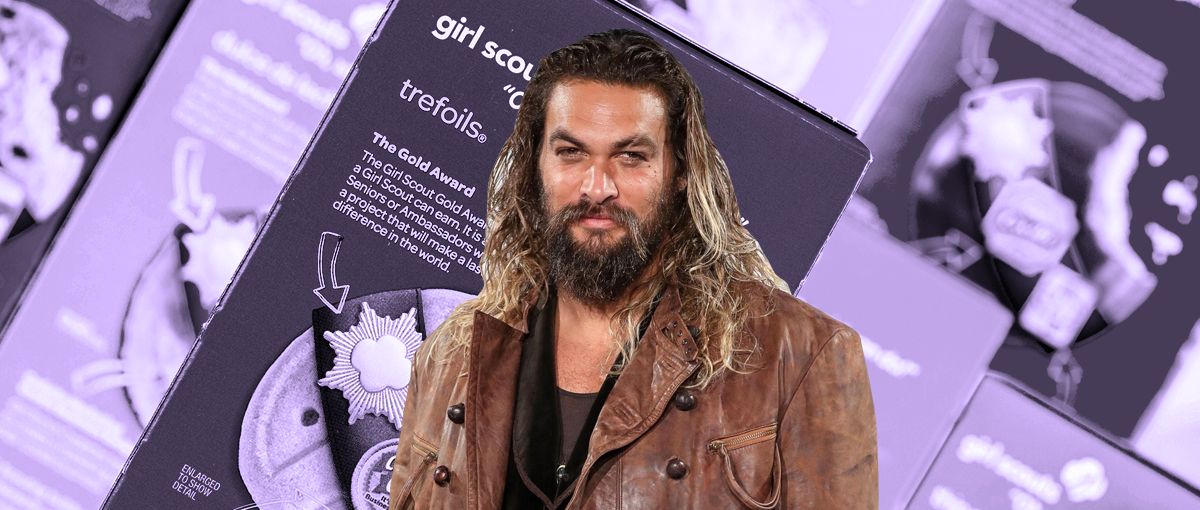
Simply put, she repackaged them. Calling them “Momoas,” she put a photo of Jason Momoa on them. And according to Holmberg herself, they became a quick hit with moms.
Speaking of moms, Holmberg’s own mother helped her with the plan.
Together, they pasted Momoa’s photo on dozens of boxes. After a photo of the new cookies went viral on Facebook, Munchies reports that the Girl Scouts of Colorado gave their blessing to actually sell the doctored cookies. Probably because the idea is absolutely genius.
We’re not too sure what Momoa thinks about it, but hopefully, he’ll be able to laugh along.
It should come as no surprise, but Holmberg was actually named as Top Cookie CEO by her branch.
It makes you wonder if she has any other ideas up her sleeve.
If you’re unfamiliar with Samoas, often called Caramel DeLites in other states, the original box looks like this:
They’re also a crowd favorite. There aren’t many cookies out there like them.
Ever wonder why they’re called two different things? It’s because they’re made by two different bakers, so they have some differences.
ABC Bakers make Caramel DeLites, which have a slightly different shape.
Samoas are made by Little Brownie Bakers, who reportedly use dark chocolate instead of milk chocolate.
[video_quote pvideo=”2PBfXr1g” video=”2PBfXr1g” text=””]
It’s a bit complicated, but luckily they’re pretty similar. Still, some people can taste the difference.
I guess when you’re expecting milk chocolate and get dark chocolate, it’s a solid reason to vent.
Just imagine how some people act if they get a box from a different baker. It might very well ruin the spirit of Girl Scout Cookie season.
It’s unclear what kind Jason Momoa prefers.
The actor, best known for Game of Thrones and Aquaman, looks like he’s all about travel at the moment instead of cookies, as his Instagram is loaded with intense scenic shots.
But no matter what cookie your local troop is selling, one thing’s for sure. It’ll still be delicious.
As far as using Momoa to help push product, cookie fans are somewhat split.
Some people think it’s an absolutely genius idea, since who wouldn’t want to look at Jason Momoa while snacking?
you just reminded me that I still wish that Momoas were real😂😂😂😂 pic.twitter.com/ZCl8HtpF8J
— ~ ☠️CarmellaEmotionless ☠️~ (@Emo_Carmella) February 17, 2019
Others think that the scout was a little too young to learn that “sex sells.” He may be shirtless on the box, but it’s also possible that her mom was just doing some wordplay with the last name.
ay to go Mom! Look at you teaching your 5th grade daughter that sex sells! You must be so proud!! SMH
— ₕₐᵣd ₖₙₒcₖ ₗᵢfₑ 🙄 (@EvelynRomero_76) February 19, 2019
Others feel like Momoa might actually get upset that they’re using his image to actually sell cookies.
It’s harmless, but it may not be a product he wants to necessarily endorse.
Remember hearing the story about the Fiji Water Girl?
At the Golden Globes, she managed to photobomb a ton of celebrity photos while holding her water display. Jamie Lee Curtis was not too happy to be in the shot with her, since then her likeness would be tied in with the product.
For something like “Momoas,” it’s a little more obvious that they’re openly using the actor to move merchandise.
But really, it’s all in the name of fun. Not only do young women learn about owning a business through cookie sales, but the funds go toward keeping the troops active.
Fresh and delicious #GirlScourCookies available today until 5pm! Help Emma and @GirlScout_77280 earn funds to go to @SpaceCampUSA and enjoy @UPMiCamp for kayaking and canoeing #PicturedRocks. pic.twitter.com/41RgZURSEu
— Julie Parsons-Hall (@GirlScout_77280) February 16, 2019
They also help fund experiences for the girls that’ll help them learn how to be leaders. The organization is a fantastic way to prove how much girls can do.
Not going to lie, I’d buy a few boxes of Momoas if they were sold in my area.
They’d be the perfect thing to display in the pantry. But a standard Samoa is just as good.