There Is Something Seriously Gross Hiding In Your Gummy Halloween Candy — You Will Never Recover
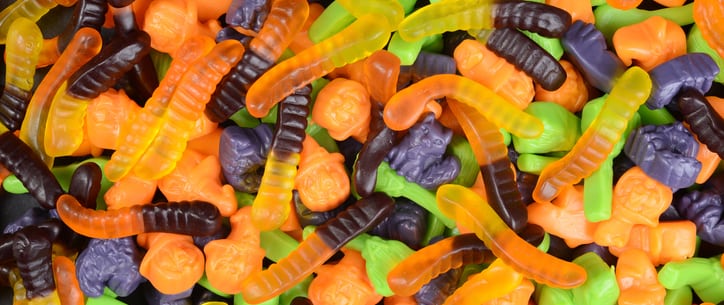

We love the fun-filled spooks, scares, and frights of the Halloween season. However, the ingredient hiding in our Halloween gummy candies might be the freakiest thing we’ll see all year — in a not-so-fun way. We hate to be the bearer of bad news, but those gummy worms, bears, and literally anything and everything that’s “gummy” is made by boiling animal byproducts. Don’t shoot the messenger!
Vegetarians and vegans are probably already well-versed in how gelatin, the main ingredient that makes those gummies so gummy, is made. They’ll be the first ones to tell you that the process is definitely not cruelty-free. In fact, as Mic reports, gelatin comes from pigskin, cattle bones, and cattle hide, all of which are animal byproducts that are considered waste after the animal’s slaughtering and processing.
Kantha Shelke, a food scientist and spokesperson for the Institute of Food Technologists, told Mic that gelatin is produced when the collagen within the pigskin/bones/hide is broken down through the process of boiling.
PETA’s website states that gelatin hides in many of our mainstream food and body products including shampoos, face masks, cosmetics, ice creams, yogurts, and sometimes even vitamins. There is, however, a vegan alternative to gelatin called “agar agar” that is derived from seaweed.
[facebook_ia_ad_tag adid=”1″]
An eye-opening viral video from Belgian filmmaker Alina Kneepkens’ Over Eten series shows, in reverse, how one’s gummy candies go from a living, breathing animal to a sugary sweet treat. It’s fascinating to watch — however, it shows brief, disturbing snippets from the pig processing stage that animal lovers will not like. Trust us.
If you’re feeling up to it, you can go ahead and check the video out on Vimeo right here. It’s definitely icky, but more importantly, it makes us face where our food comes from.
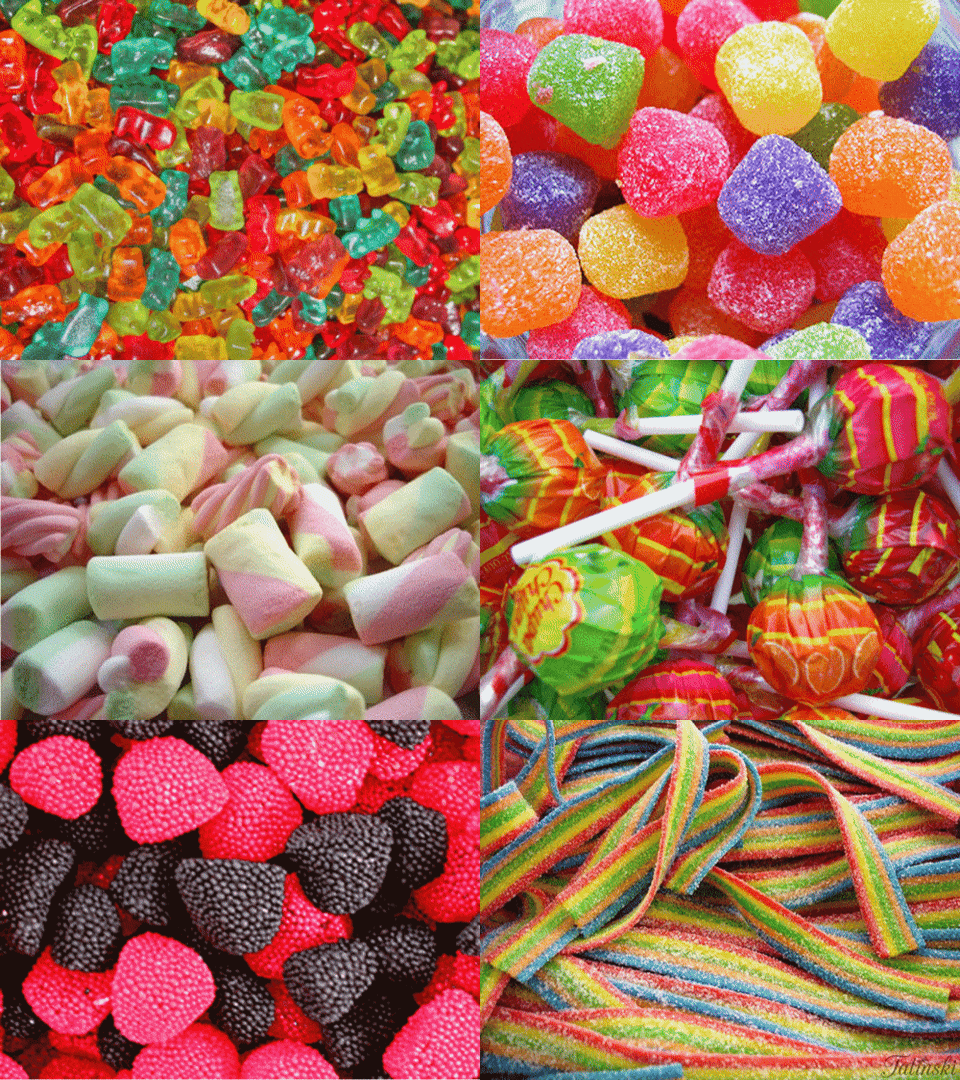
Luckily, you can swear off gelatin yet still get your gummy candy fix. According to PETA, Fruit by the Foot, Haribo Sour S’ghetti Gummi Candy, Jujubes, Jujyfruits, Sour Patch Kids, and Swedish Fish are all gelatin-free. Thank goodness.
Yes, it’s true that ignorance is oftentimes bliss when it comes to what’s really in our foods. But actually knowing makes you a more aware consumer and may lead you to make different choices.