Starbucks Is Offering Their Best Drink Deal Yet — But Only For Today
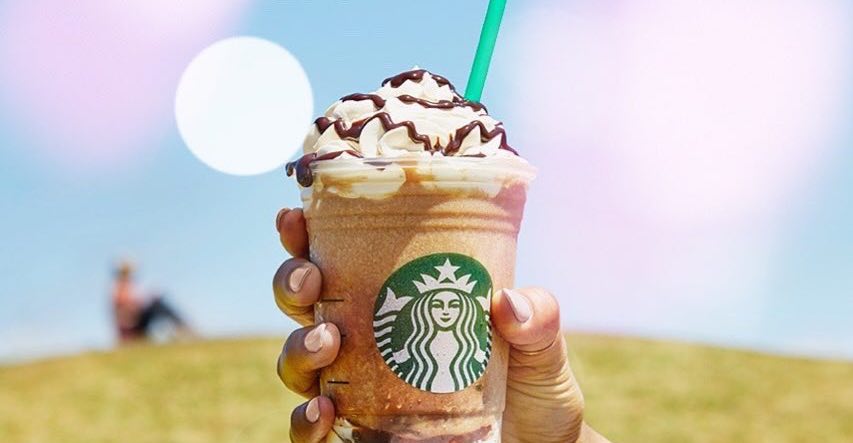

The stars have truly aligned this Valentine’s Day. And no — we’re not alluding to the fact that we have fallen madly in love just in time for “the most romantic day of the year.” We’re talking about the fact that V-Day and Starbucks’ Happy Hour fall on the same day — Thursday, February 14th. So, perhaps we have fallen in love after all…
Starbucks Happy Hour begins today at 3 p.m. and runs until the store closes. Starbucks Rewards members can partake in Happy Hour bonuses like today’s BOGO offer. That’s right, today you can head into your local Starbucks after 3 p.m., grab a drink, and get another free drink for your valentine — or yourself, for later in the day. We won’t judge who that second drink may be for.
This Thursday offer applies to espresso beverages sized grande and larger. Buy one espresso drink — that is, any latte, macchiato, or flat white — and get another espresso drink (of lesser value) free of charge.
And you bet your booty this applies to Starbucks’s limited-edition Cherry Mocha. Mocha sauce, cherry syrup, and Starb’s signature espresso come together to make the Cherry Mocha, which is then topped with cocoa Valentine’s sprinkles. It’s adorbs dot org and super yummy.
Look for the Valentine’s Day Happy Hour coupon in your inbox or in your Starbucks app. Then, take a trek over to Starbucks to redeem your reward.
Your valentine will understand if you have to push your date back an hour to get in your BOGO coffee time. Right?
Both people with V-Day plans and without are stoked for Starbucks’s Valentine’s Day Happy Hour. This is the best Valentine’s Day plan we’ve had in years.
We’ll be the first to admit that Valentine’s Day is purely a capitalist holiday. However, we don’t really mind when Starbs gets in on the celebration.
We look forward to seeing you today as well! 💚-Anthony
— Starbucks Care (@StarbucksCare) February 14, 2019
[video_quote pvideo=”WkFf4DZb” video=”WkFf4DZb” text=””]
Wow. We’ve never felt so seen.
Just so y’all know happy hour at Starbucks today is buy one get one free. And I will. ☕️☕️☕️☕️☕️ pic.twitter.com/IPlIgSYN03
— ʍօɖɛʀռⲇ ʍⲓ⳽ȶʀɛ⳽⳽ ☤ (@mzshannon) February 14, 2019
See? We knew someone would take advantage of the offer to gift themselves some self-love.
starbucks has happy hour today & i can’t wait to get myself 2 coffees. happy v day from v to v 🥰
— valentina (@ValentinaVallll) February 14, 2019
Meet you there. 3 p.m. sharp.
Soooooo true. Sync up your sad boi/girl time with Happy Hour and be forever changed.
While you’re grabbing your BOGO espresso drinks, you might want to check out the Valentine’s Day cake pops Starbucks is also serving for the holiday. They’re pretty darn cute.
As are the heart-shaped sugar cookies. Sprinkles on sprinkles on sprinkles…
The coffee chain has really done the most for all those Starbucks lovers out there. And for that, we thank them.
Even Dunkin’ is showing Starbs some love this V-Day. We love it when our frienemies get along!
But today, we're all about love. Happy Vday, @Starbucks ! pic.twitter.com/wzHL9eOe6h
— Dunkin' (@dunkindonuts) February 14, 2019
Meanwhile, some Starbucks fans are brewing up their own Happy Hour offer ideas. Honestly, we’d get behind this.
Huh. We guess we did find love for Valentine’s Day.
You mocha me craazzyyy❤️❤️❤️ #Starbucks pic.twitter.com/yRpeGqDVKq
— BeHir (@behirfanforever) February 14, 2019
Get to Happy Hour and enjoy the buy-one-get-one deal, all you Starbucks lovers.

