Starbucks Is Making a Genius Shift More Companies Should Learn From

Sometimes, meaningful change does not come from complex strategies or radical reinventions, but from reconnecting with what made people care in the first place. Over recent months, Starbucks has been quietly reshaping its approach under the leadership of its new CEO, Brian Niccol, with a clear goal in mind, restoring the essence of the Starbucks experience and rebuilding emotional ties with customers.
At the center of this shift is a simple but powerful idea, focusing on the moments that originally turned a coffee stop into something more personal. Instead of chasing constant novelty, the company has chosen to refine its identity by listening closely to what customers missed and valued most.
This renewed direction reflects a broader understanding that brand loyalty is often rooted in familiarity, comfort, and human interaction, not just convenience or speed. Starbucks appears to be betting that rediscovering these basics can help reverse slowing performance and strengthen long-term trust.
Small Changes With Noticeable Impact

Several operational decisions signal this return to fundamentals. Starbucks has streamlined its menu, removed extra charges for milk alternatives, reopened condiment bars, and reintroduced free refills for brewed coffee enjoyed inside its cafés. Each adjustment may seem minor on its own, yet together they reshape the in-store atmosphere.
Early indicators suggest these moves are resonating. The company has reported a notable rise in customers choosing ceramic mugs and glassware instead of disposable cups, a sign that more people are lingering rather than rushing out. That behavioral shift points to a renewed sense of comfort and belonging within the café space.
These changes also reinforce an important message, efficiency matters, but it should not come at the expense of warmth. By encouraging customers to slow down and stay, Starbucks is once again positioning its locations as places to pause, not just points of transaction.
Why Handwritten Notes Still Matter

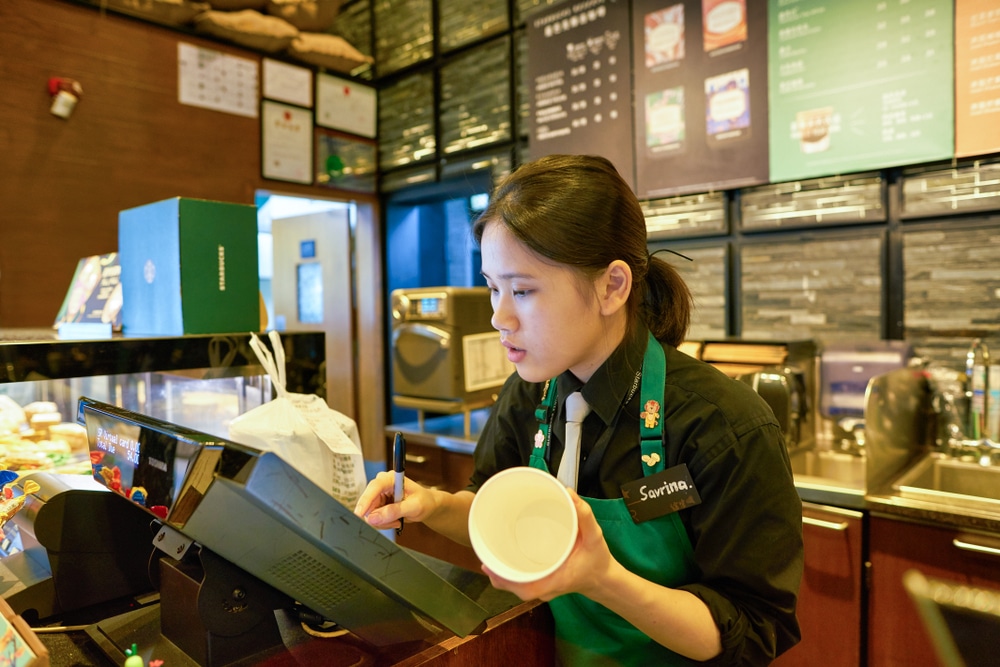
Perhaps the most telling decision involves something almost anachronistic in a digital-first world, handwritten notes on cups. To support this practice, Starbucks reportedly purchased hundreds of thousands of markers, reintroducing a habit that had gradually disappeared and was fully abandoned during the pandemic.
From a purely functional perspective, this step is unnecessary. Mobile orders already arrive with printed labels containing names and drink details. Writing on the cup adds no operational value and, in some cases, even slows down busy baristas. Some employees have expressed concern that it can feel forced or inefficient during peak hours.
Yet this is precisely where the insight lies. The handwritten note is not about logistics, it is about signaling presence. Even a brief message communicates that a real person prepared the drink, creating a subtle moment of recognition that technology alone cannot replicate.
A Lesson Beyond Coffee
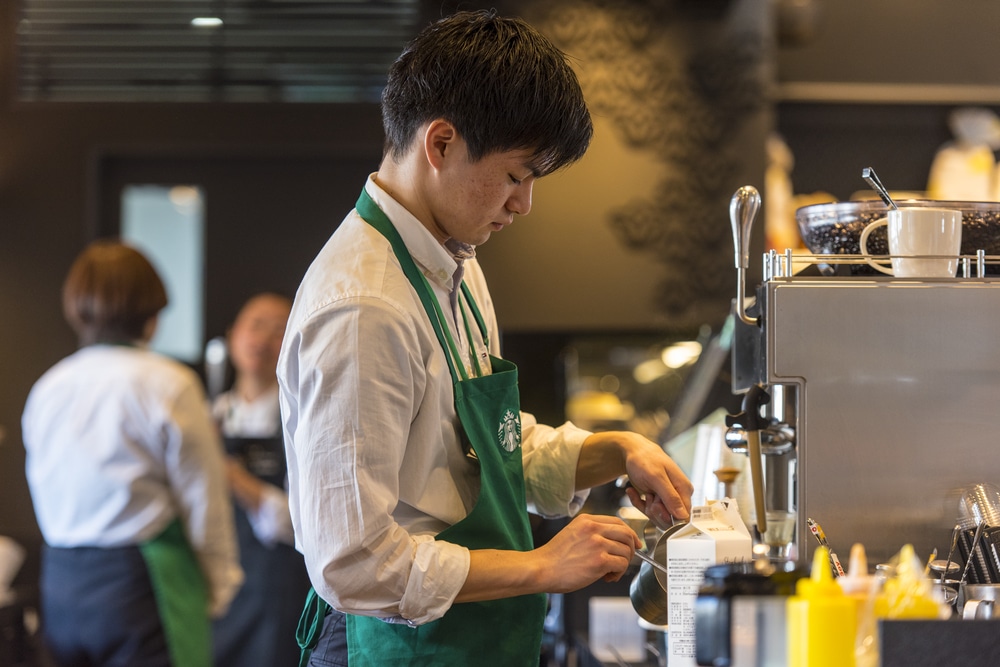
The broader takeaway extends far beyond the café counter. Personal connection almost always requires a bit more effort and time, and it rarely fits neatly into systems designed purely for speed. However, that effort often defines how customers remember an experience and whether they return.
In many industries, the drive for optimization has gradually stripped away human touchpoints. Automated messages, standardized processes, and digital shortcuts improve efficiency, but they can also flatten relationships. Starbucks’s recent choices highlight the value of intentionally reintroducing friction when it serves a deeper purpose.
Ultimately, this shift underscores a simple truth, genuine connection is not the fastest path, but it is often the most durable one. Companies willing to slow down, even briefly, to acknowledge the people they serve may find that loyalty grows not despite the effort, but because of it.