Beef Prices May Rise as First U.S. Slaughterhouse Strike in 40 Years Begins
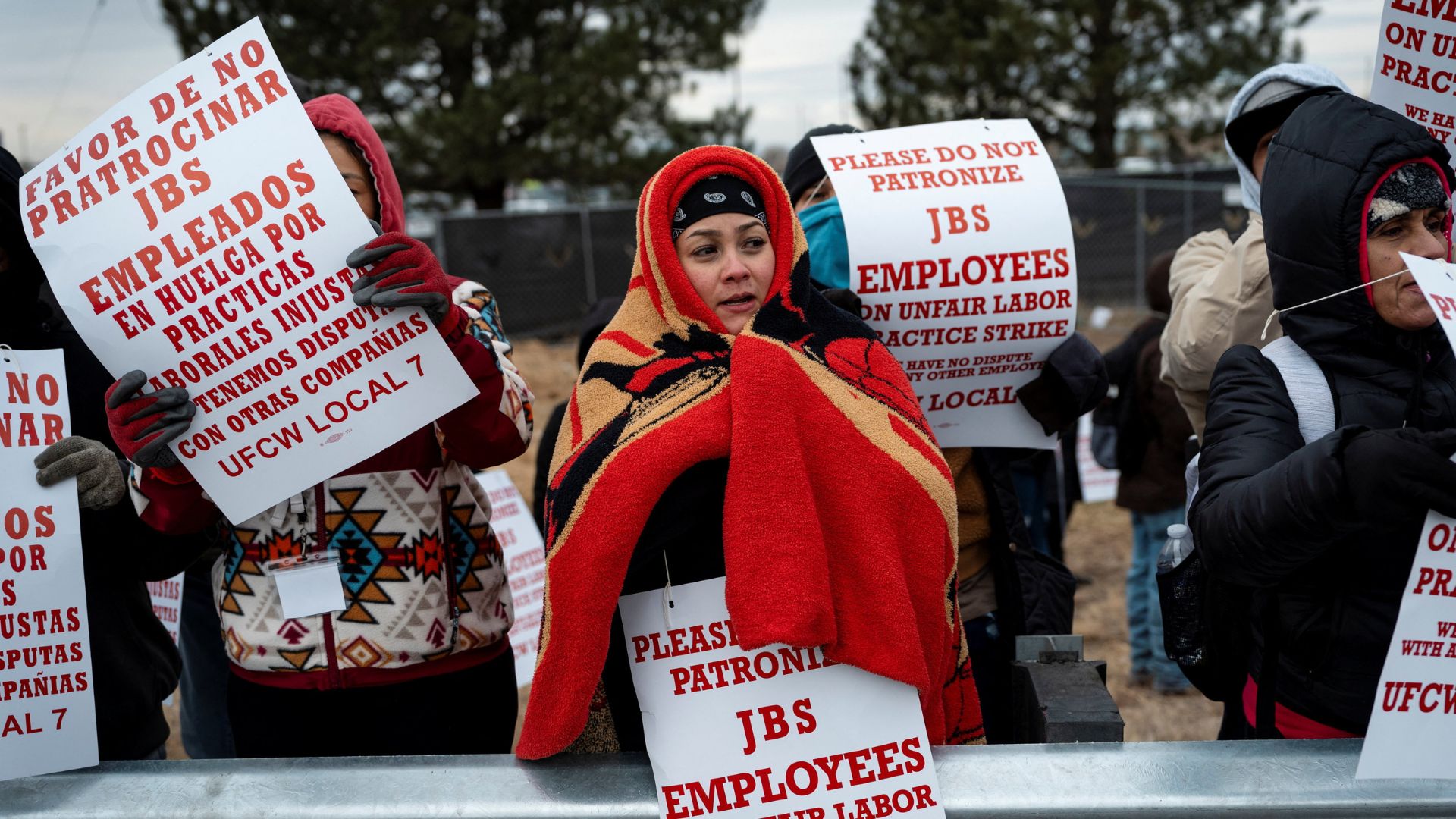

Thousands of meatpacking workers walked off the job Monday at a JBS-owned plant in Greeley, Colorado, marking the first strike at a U.S. beef slaughterhouse in 40 years. Employees of Swift Beef Co. picketed outside, stepping out into the cold as the sun rose, calling out “huelga,” a rallying cry meaning “strike” in Spanish, while others carried signs urging people not to buy JBS products.
The walkout involves 3,800 unionized workers represented by United Food and Commercial Workers Local 7. Union officials said 99% of members voted to strike, and by early afternoon, picket lines had drawn over 2,600 workers. The strike is planned for two weeks, though the union has not ruled out a longer work stoppage, after the previous contract expired Sunday night.
JBS USA, the world’s largest meatpacking company, pushed back on the union’s accusations, saying no labor laws were broken and that its contract proposal was fair. In a statement to CNN, JBS said its proposal “has already delivered meaningful wage increases, a secure pension, and long-term financial stability” to its other unionized workers. The company said it would keep the Greeley facility running, with spokesperson Nikki Richardson noting that many employees reported to work on Monday.
Workers Say JBS Offered Below-Inflation Raises and Made Them Pay for Safety Gear
At the heart of the dispute are wages, healthcare, and safety costs. The union said JBS offered annual raises of less than 2%, below Colorado’s current inflation rate, while workers were charged $1,100 or more in many cases to offset the company’s costs for personal protective equipment, costs the union said should be covered by the company.
Workers also accused JBS of retaliating against employees involved in organizing efforts, with union officials filing unfair labor practice charges against the company. Union general counsel Matt Shechter said JBS held one-on-one meetings to intimidate workers into quitting the union. Kim Cordova, president of UFCW Local 7, told CNN: “For months now, JBS has been insisting on poverty-level wages for workers at the plant … while at the same time putting all the risk of rising healthcare costs on workers.”
For workers like Leticia Avalos, a union steward who has worked at the plant since 2020, the decision to strike carries personal stakes. She relies on her paycheck to support her family, including a 6-month-old baby, but told the AP she was willing to sacrifice to get the company to listen. “They don’t really value their workers, and we’re the ones that help them get all their profit,” she said.
The Strike Hits as U.S. Beef Prices Reach Record Levels
The strike comes at an already strained moment for the beef market. The U.S. cattle inventory fell to a 75-year low of 86.2 million animals as of January 1, down 1% from the prior year, pushed lower by prolonged drought and ranchers receiving inadequate returns. Beef prices have climbed 15.2% over the past year, according to the American Farm Bureau Federation, adding pressure on consumers nationwide.
The price of 100% ground chuck climbed from $2.55 to $6.07 per pound over the past two decades, more than doubling, according to Bureau of Labor Statistics data. President Trump’s tariffs on Brazil, a major beef exporter, have further tightened supply, and in February, the administration announced it would quadruple beef imports from Argentina by 80,000 metric tons while asking the Department of Justice to investigate foreign-owned meatpackers over pricing.
The JBS strike follows a separate blow to the industry just months earlier. In January, Tyson Foods shuttered its meatpacking plant in Lexington, Nebraska, citing the shrinking national herd and millions of dollars in projected losses. That closure was expected to ripple through surrounding towns and workers, and the Greeley walkout adds further strain to a beef supply chain that has been tightening steadily.
A Prolonged Dispute Could Push Consumer Prices Even Higher
The Greeley plant processes roughly 6% of total U.S. beef slaughterhouse capacity, according to livestock market adviser Abby Greiman of Ever.Ag. While other facilities could absorb some of that volume in the short term, according to Greiman, an extended dispute would create mounting pressure across Colorado and neighboring states, according to Jennifer Martin of Colorado State University’s animal sciences department, particularly for feedlot operators who must keep feeding cattle while they wait to go to market.
Martin said cattle held at feedlots grow costlier to maintain with each passing day, adding that consumer prices will likely rise as a result. UFCW Local 7 president Kim Cordova put the stakes in broader terms, telling CNN: “If these plants close, it will have a huge impact on the economy, not just in Colorado, but in the US.”
JBS ranks as the largest employer in Greeley, a city of about 114,000 people roughly 50 miles northeast of Denver, a community where, as Avalos told the AP, the strike carries a huge impact. “I know a lot of us are worried, and hope that nothing goes even more south,” she said. The last comparable walkout, at a Hormel plant in Minnesota in 1985, lasted more than a year with violent clashes between police and protesters, according to the Minnesota Historical Society.