Alabama Man Says Domino’s Refused His $65 Order After He Tried to Pay With Cash
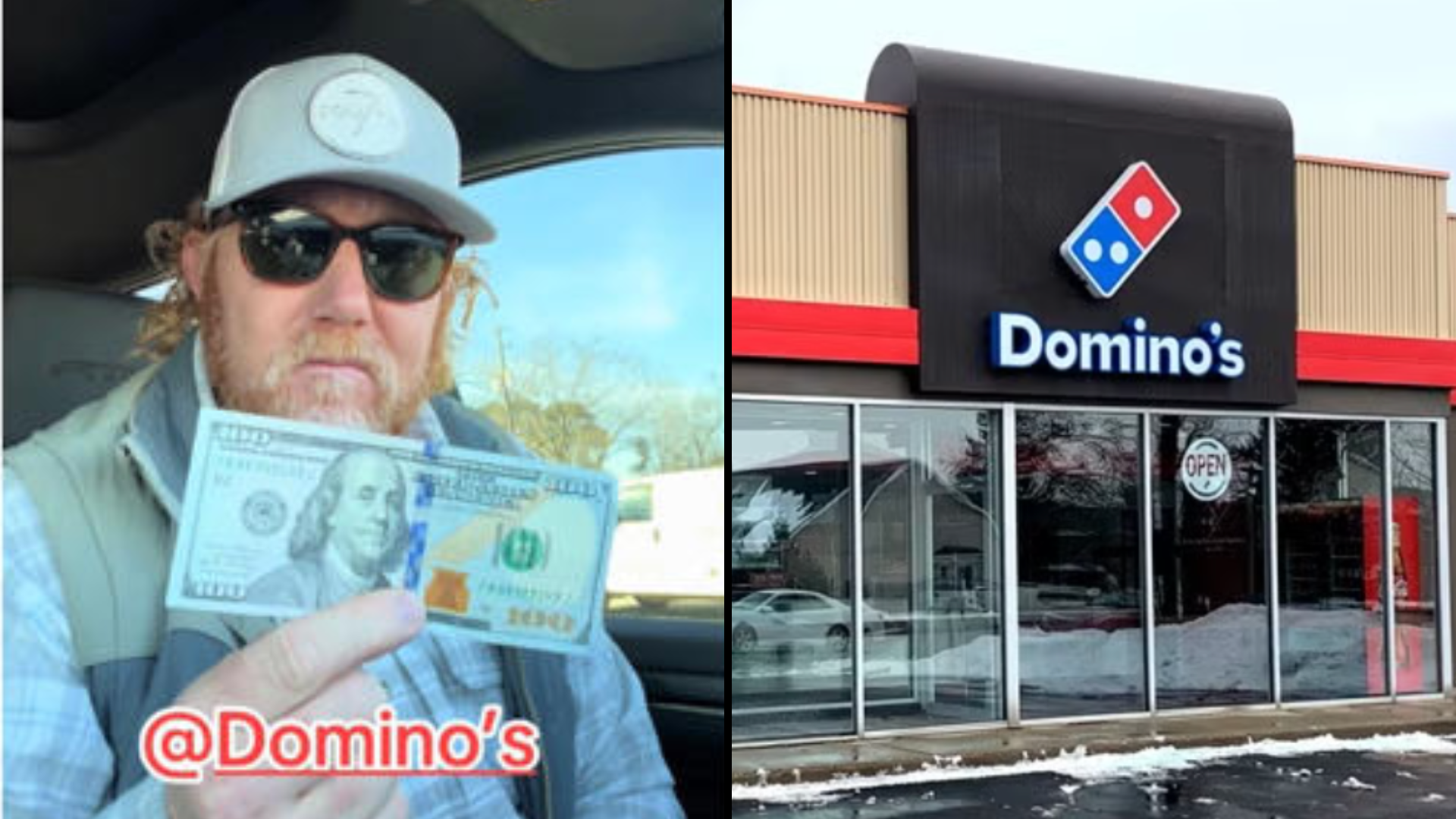

What should have been a quick Domino’s pickup turned into a frustrating ordeal for Alabama resident Jeremy Harbin. He had placed a $65 phone order for pizzas and wings ahead of a college football watch party, expecting to grab the food and head out. Instead, his night stalled at the counter, where a simple payment method sparked a situation that would soon go viral.
Harbin arrived to pick up his order with friends waiting and food already prepared. But when he attempted to pay with a $100 bill, employees stopped the transaction immediately. The refusal caught him off guard, especially since he wasn’t trying to make a small purchase with a large bill. The food was ready, the total was clear, yet the exchange abruptly halted.
Feeling stunned, Harbin recorded the moment and later shared it online. In the clip, he holds up the $100 bill, emphasizing that it is legitimate U.S. currency. What surprised him most wasn’t just the refusal itself, but how quickly the situation escalated from a simple payment issue into a complete denial of service, despite the order already being made.
The Cash Policy That Sparked Confusion
According to Harbin, the employee told him the store does not accept large bills, a policy that immediately raised questions. His total was $65, meaning the store would need to provide only $35 in change. From his perspective, this wasn’t an unusual or risky transaction, but rather a normal cash exchange that most restaurants handle daily without issue.
The problem worsened when Harbin realized he had forgotten his wallet and only had cash on him. With no debit or credit card available, he tried to work with the staff to find a solution. Instead, he felt locked into a rigid policy that left no room for common-sense judgment or flexibility, even though the food was already boxed and ready.
Harbin said the refusal felt especially unreasonable given the context. He wasn’t asking the store to break a bill for a small item or hold excessive cash. He was simply trying to pay for a substantial order. The disconnect between the policy and the real-world situation became the core reason the interaction felt so frustrating to him.
Attempts to Compromise Were Rejected
Trying to de-escalate the situation, Harbin offered multiple compromises. One suggestion was allowing Domino’s to keep the $35 in change as credit toward a future order. Another idea was returning later to collect the remaining balance. From his point of view, these options removed any financial or safety concern for the store.
Despite those efforts, Harbin says every proposal was met with a firm refusal. No alternative payment solutions were offered, and no manager appeared willing to override the policy. The lack of problem-solving frustrated him more than the policy itself, making the interaction feel cold and transactional rather than customer-focused.
Eventually, Harbin left without his food, even though it had already been prepared. That outcome struck many viewers as the most baffling part of the story. From the outside, it appeared the business was willing to discard a completed order rather than make a reasonable accommodation, reinforcing Harbin’s belief that customer service had taken a back seat to inflexible rules.
Online Backlash and the Bigger Debate
After Harbin posted his experience on TikTok, reactions poured in. Many viewers sided with him, arguing that refusing a $65 cash transaction was excessive. Commenters described the situation as a symbol of declining customer service, where policies are enforced without regard for logic or context, even when doing so hurts both the customer and the business.
Others defended Domino’s, pointing to safety concerns and corporate rules around handling large bills. Some restaurant workers shared similar policies at their own workplaces, explaining that limited cash on hand and theft prevention often drive these decisions. Still, even some defenders admitted the situation could have been handled with better communication and flexibility.
The incident ultimately reignited a broader debate about cash acceptance in modern retail. While businesses are not legally required to accept cash, many people see its rejection as a troubling shift. For Harbin and many viewers, the story wasn’t just about pizza — it was about how everyday transactions are becoming less human, and less forgiving, than they used to be.

