Family-Owned Burger Chains Outperformed McDonald’s After Prioritizing Quality Over Massive Expansion

Size was supposed to guarantee dominance in fast food. McDonald’s outspends every regional rival on advertising and operates thousands more locations nationwide. Yet that advantage is failing to translate into growth. Smaller chains like In-N-Out, Whataburger, and Culver’s are now outpacing the giants, gaining market share with a fraction of the marketing muscle. Something fundamental has shifted in how Americans choose where to buy a burger, and the answer has nothing to do with size.
In-N-Out’s growth makes the shift concrete. The California-based chain’s domestic sales rose by roughly 10% in 2025, according to industry tracking. Technomic, a leading restaurant research firm, found that two other regional names, Culver’s and Whataburger, now rank as the fifth and sixth largest burger chains in the country by total sales. For a chain with a few hundred locations to outsell brands with thousands, something about its business model is resonating.
None of this happened by accident. Regional burger chains succeeded by holding onto something the biggest names started losing: a reputation for being worth the price. That reputation did not crack on its own. It cracked because of decisions inside the boardrooms of McDonald’s, Burger King, and Wendy’s, decisions that reshaped what a fast-food meal costs and what customers believe they are getting for that money.
McDonald’s Raised Prices Faster Than Inflation, Then Watched Customers Stop Believing It Was Worth It
Fast food got dramatically more expensive after the pandemic, and customers noticed immediately. According to the Consumer Price Index, fast-food prices climbed about 38% between 2020 and 2025, a pace that outran overall inflation by roughly 56% over the same stretch. McDonald’s prices alone rose more than 100% over the past decade, a 2024 industry report found, more than triple the rate of inflation nationwide. The math stopped feeling fair to the people paying it.
Specific menu prices made the gap impossible to ignore. Reports surfaced of an $18 Big Mac meal in Connecticut, a $7.29 Egg McMuffin, and a $5.69 side of hash browns, numbers that turned routine fast-food trips into sticker shock. Surveys from UBS Evidence Labs, shared with Reuters, found the share of customers who said McDonald’s offers good value fell from 55% in 2020 to roughly 40% by 2024. Regional chains never had that reputation to lose.
That loyalty is not an accident either. It comes from decades of consistency that price hikes cannot buy back overnight. Whataburger CEO Debbie Stroud told the Wall Street Journal, “There is a craveability that I think has created this loyalty over so many decades.” Customers are not just choosing a cheaper option. They are choosing brands that never gave them a reason to feel cheated, and that distinction shows up clearly in how these companies actually run their restaurants.
Whataburger Is Growing Six Times Faster Than Before COVID, One Custom Order at a Time
Whataburger’s expansion plans reveal how seriously customers are rewarding consistency. The Texas-based chain operates in 17 states, generates more than $4 billion in annual sales, and is growing at six times its pre-COVID rate. It plans to open 60 new locations this year alone. None of that growth comes from slashing prices or chasing trends. It comes from letting customers control their own order, down to the toppings.
Stroud described the customization that keeps customers coming back. “Our customers understand that they can add grilled jalapeños or swap out grilled onions for our freshly cut tomatoes,” she told the Wall Street Journal. Culver’s, which runs 1,066 restaurants across 26 states, takes a similar approach. Chief executive Julie Fussner credits “the breadth of the menu and the quality of our food” as the reason customers pick her chain over national giants with far bigger budgets.
Survey data backs up what these menus suggest. Technomic found that Culver’s and Whataburger rank low on price and speed but consistently score near the top for food quality and overall satisfaction. That tradeoff is deliberate, not accidental. Both chains have built their entire identity around resisting the instinct that drives most American businesses: grow faster, expand wider, open more locations than anyone can properly staff or supply.
In-N-Out Chose to Grow Slower on Purpose, and That Choice Is Now Outperforming McDonald’s Strategy
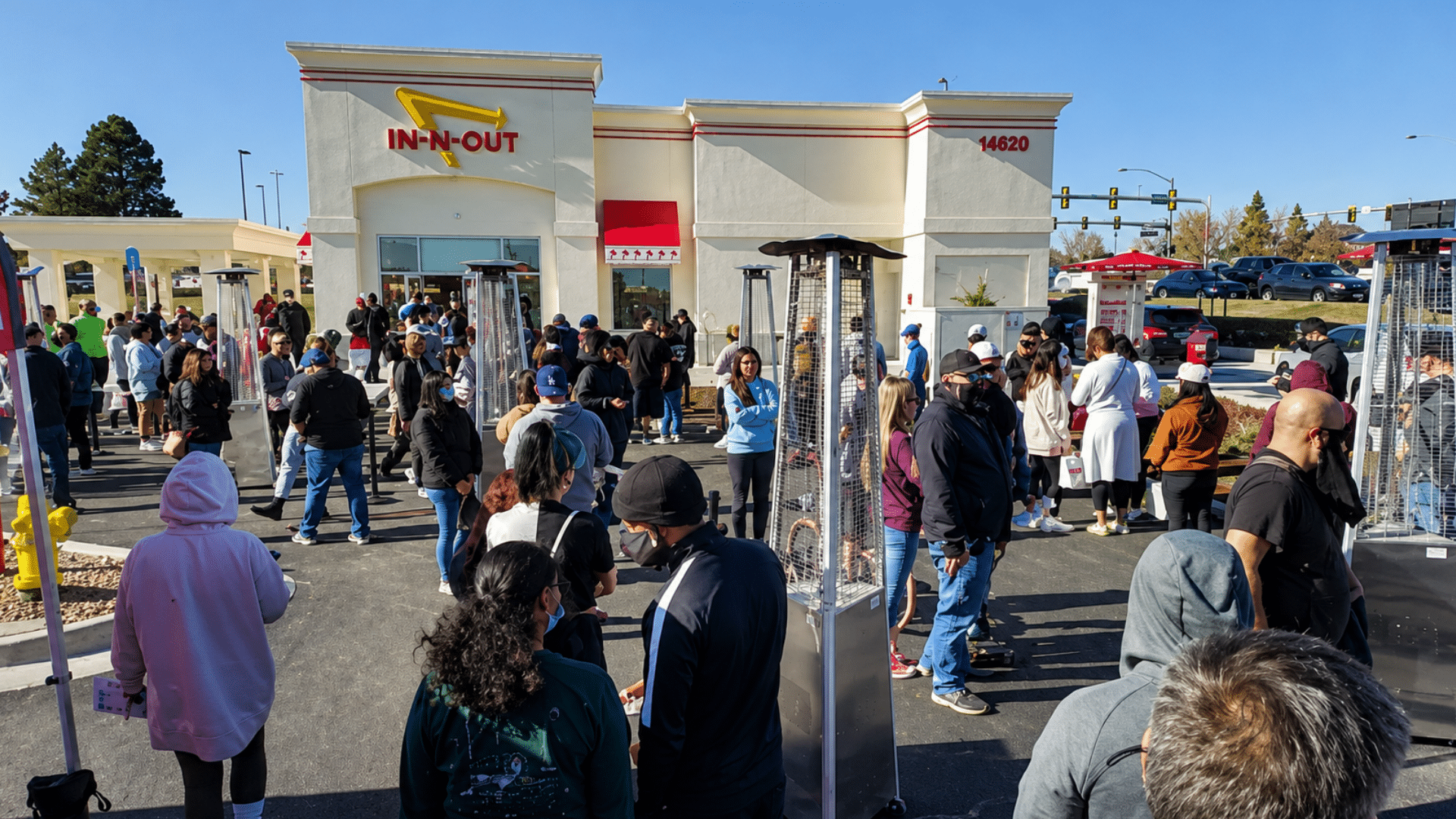
In-N-Out’s restraint was a deliberate business decision, not a limitation. Founded in 1948 by Harry and Esther Snyder in Baldwin Park, California, the chain is still owned by their granddaughter, Lynsi Snyder, and has never franchised a single location. In 2010, the company made an explicit choice to slow its own expansion rather than chase the growth rates of its rivals. That decision looks less like caution today and more like foresight.
In-N-Out’s chief operating officer, Denny Warnick, explained the philosophy behind that restraint. “An overemphasis on growth would compromise our performance,” he said. The numbers back him up. The chain now operates across ten states, including California, Nevada, Arizona, Texas, and Tennessee, yet has added only four states in the past decade. Every patty still comes fresh and never frozen from the company’s own butchers, and every fry is hand cut from a whole potato inside the restaurant.
The real story is not that small chains found a clever niche while McDonald’s stumbled. It is that the entire fast-food growth model, more locations, more menu items, more aggressive pricing, was never actually about the burger. In-N-Out and Whataburger kept their menus simple and their footprints small, and in doing so kept the one thing money cannot buy back: a customer’s belief that the product was honest. McDonald’s spent decades trading that belief for square footage.