Gen Z Startup Develops Device That Detects Hunger and Automatically Orders Food
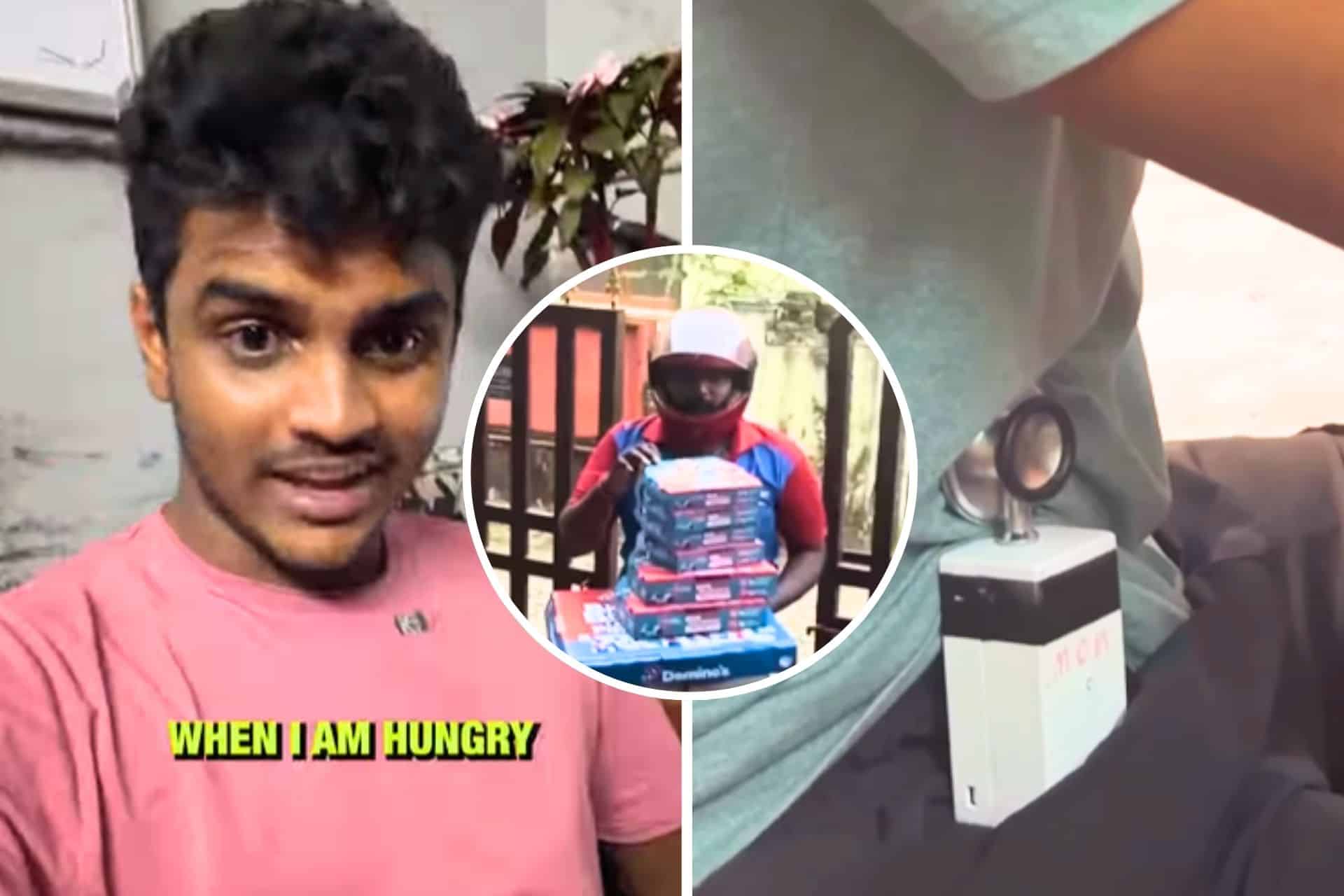

For most people, hunger is just a feeling, but for a Gen Z engineering graduate from India, it became a problem worth engineering a solution for.
After long work sessions where he and his startup team composed of his friend group often forgot to eat, creator Sohan M. Rai (@zikiguy on Instagram) decided to build something that would take the guesswork out of mealtime. The result is MOM, short for Meal Ordering Module, a device designed to detect stomach growls and automatically order food on your behalf.
What started as a playful idea quickly turned into a functional prototype. By combining a stethoscope, a small microphone, and a Wi-Fi–enabled microcontroller, Rai built a system that listens for hunger cues and communicates with an AI model. When MOM identifies a growl, it evaluates the user’s past orders, budget, and preferred restaurants before placing the order on Zomato, an Indian food delivery app, using the platform’s developer tools.
It may sound like a joke, but the invention has gained online attention for a reason: it taps into the real-world appeal of automation, especially at a time when food delivery has become an everyday convenience for millions.
How MOM Was Born
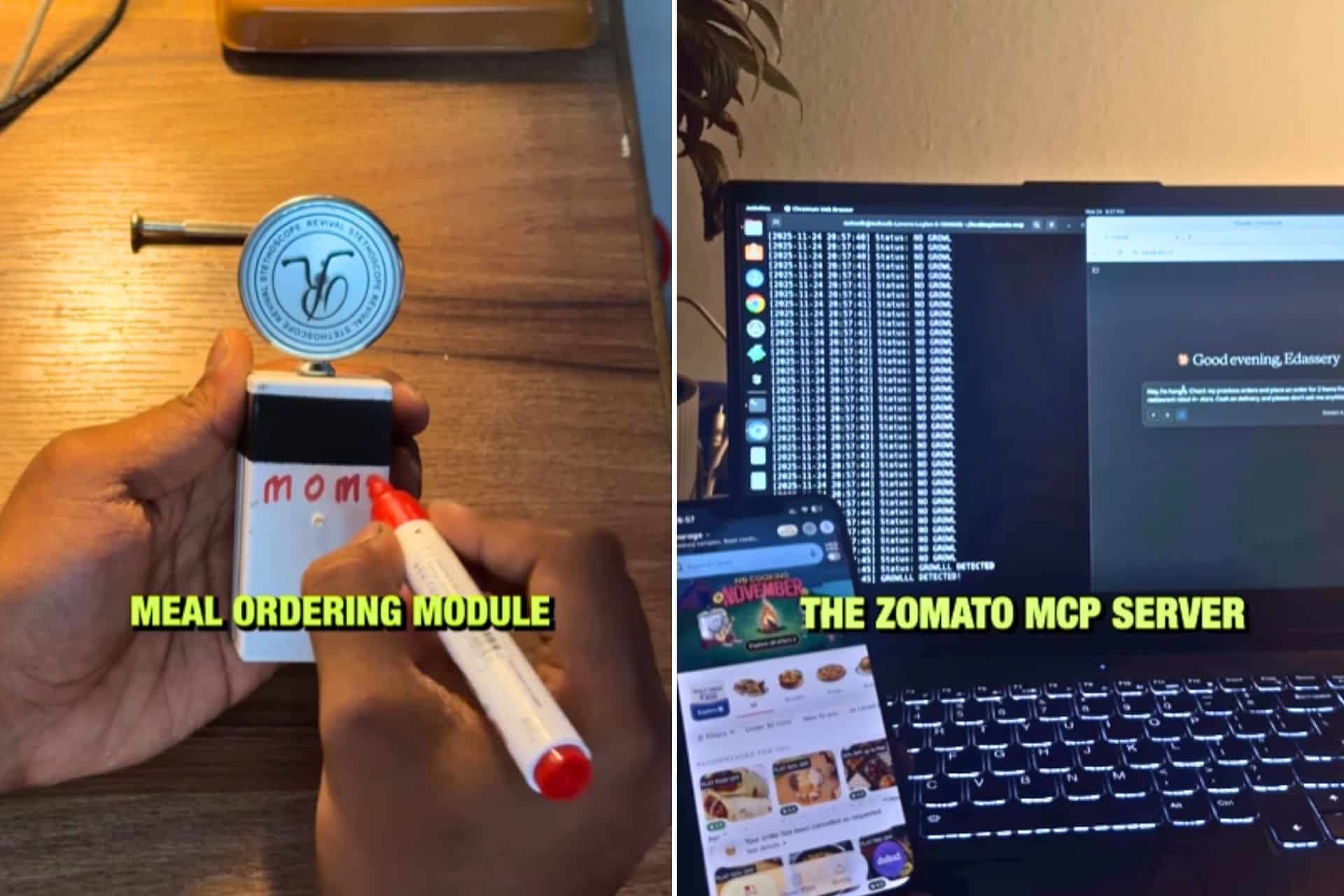
During development, Rai’s team realized a stethoscope could detect internal body sounds more accurately than a standard microphone. They attached a miniature mic to the stethoscope and connected it to an ESP32 controller, which sends the audio input to a local server. There, an AI model analyzes the sound to determine whether the user is experiencing mild hunger or full-on “feed me now” levels.
Once the intensity is measured, the AI generates a prompt to order food based on the user’s history. It checks ratings, pricing, and common choices before selecting a meal. The Zomato app make this possible because it currently supports fast, automated food ordering across 800+ cities and over 3,00,000 restaurants in India, giving the device a massive network to pull from.
Rai emphasizes that the project isn’t meant to be a commercial product. In his words, it was simply a fun experiment under his Instagram series titled “Inventions You’ll Never Think Of”. Undoubtedly one invention that unexpectedly resonated with millions online.
Why MOM Attracted Netizen’s Attention
The video demonstrating MOM quickly gathered attention across social platforms. Some viewers were genuinely curious about the tech, asking how Rai trained the system or how he tested hunger detection (“Had to sit a whole day without eating,” he joked). Others found humor in the invention, proposing alternative uses, like attaching it to pets to monitor feeding needs.
Despite the playful reaction, the invention taps into a broader conversation about how deeply automation is entering everyday life. Devices that track sleep, movement, hydration, and stress are already common; MOM simply pushes the idea one step further by letting AI handle impulsive decisions like ordering dinner.
Rai’s previous viral projects, including an autonomous drone that delivered pizza, already showed his interest in blending creativity with practical problem-solving. MOM follows the same pattern: imaginative, slightly chaotic, surprisingly functional, and reflective of Gen Z’s comfort with experimenting publicly.
What Comes Next for MOM

MOM may not be destined for mass production, but it hints at where everyday devices are heading. As AI tools become more capable and more accessible, the line between convenience and automation grows thinner. A device that listens for stomach growls feels unusual today, but ten years ago, so did asking a smart speaker to dim the lights or reorder groceries.
What makes MOM interesting isn’t just its ability to place a food order. It’s the mindset behind it: if a problem is small, repetitive, or easy to forget, someone in this new generation of developers is willing to automate it.
And as platforms like Zomato continue expanding their tech ecosystems, inventions like this are increasingly possible even if they start as nothing more than a joke among hungry friends.