Seattle McDonald’s Only Serves Customers Through a Hatch Because Conditions Got ‘Too Unsafe’
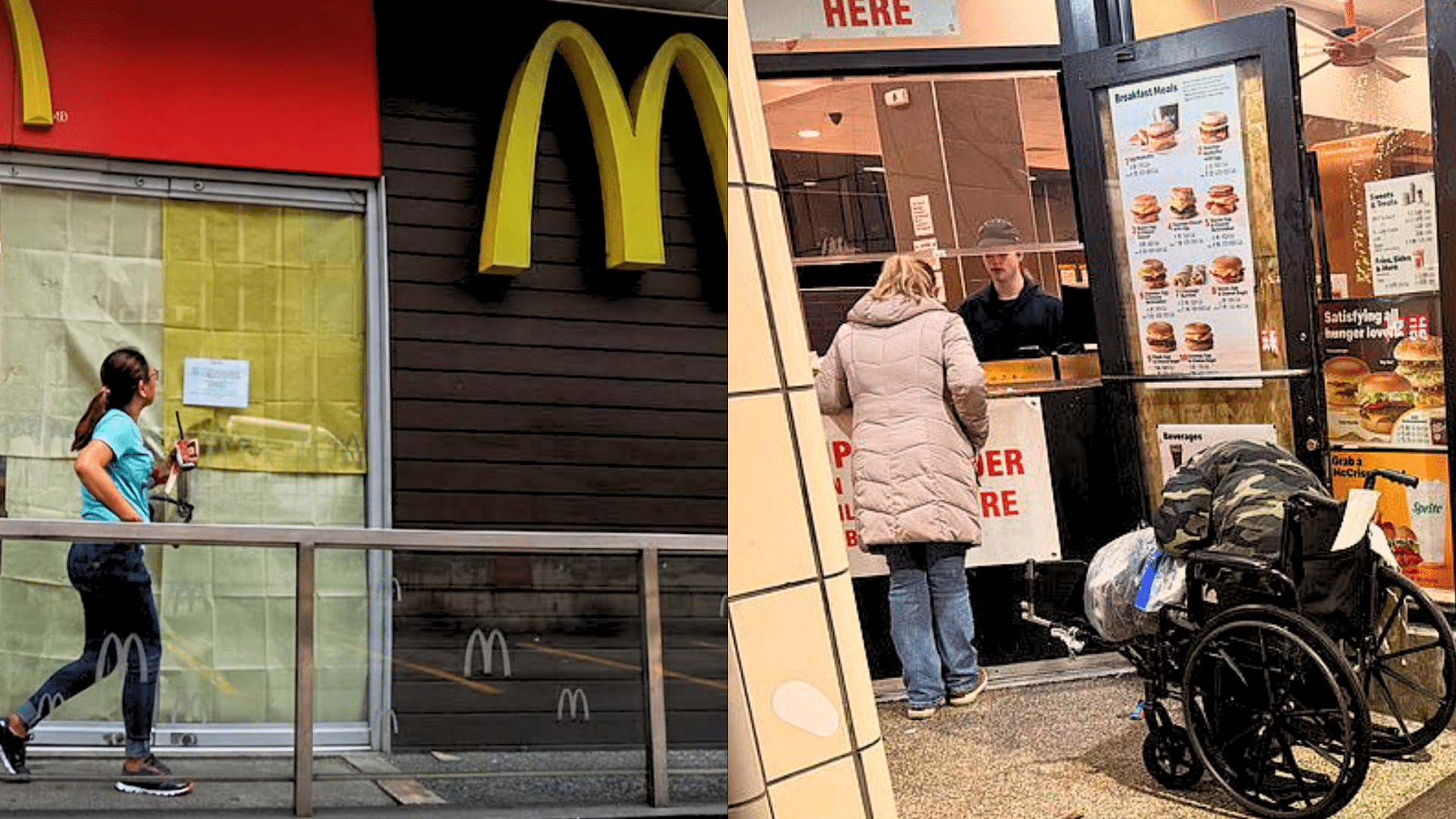

In downtown Seattle, one McDonald’s has crossed a line few Americans ever expected to see. At the corner of 3rd Avenue and Pine Street, customers are no longer allowed inside the restaurant at all. Instead, food is handed out through a makeshift hatch cut into what used to be the front doors. Plexiglass blocks most of the opening, leaving only a narrow slot for payments and food. The reason, according to workers and locals, is simple and disturbing. Conditions outside became too unsafe. Murders, stabbings, drug use, and constant violence forced the fast-food giant to abandon the idea of a public dining room altogether. What was once a routine stop for fries and milkshakes has become a symbol of urban breakdown, but city leaders insist the story is more complicated.
From Open Doors to Plywood and Plexiglass
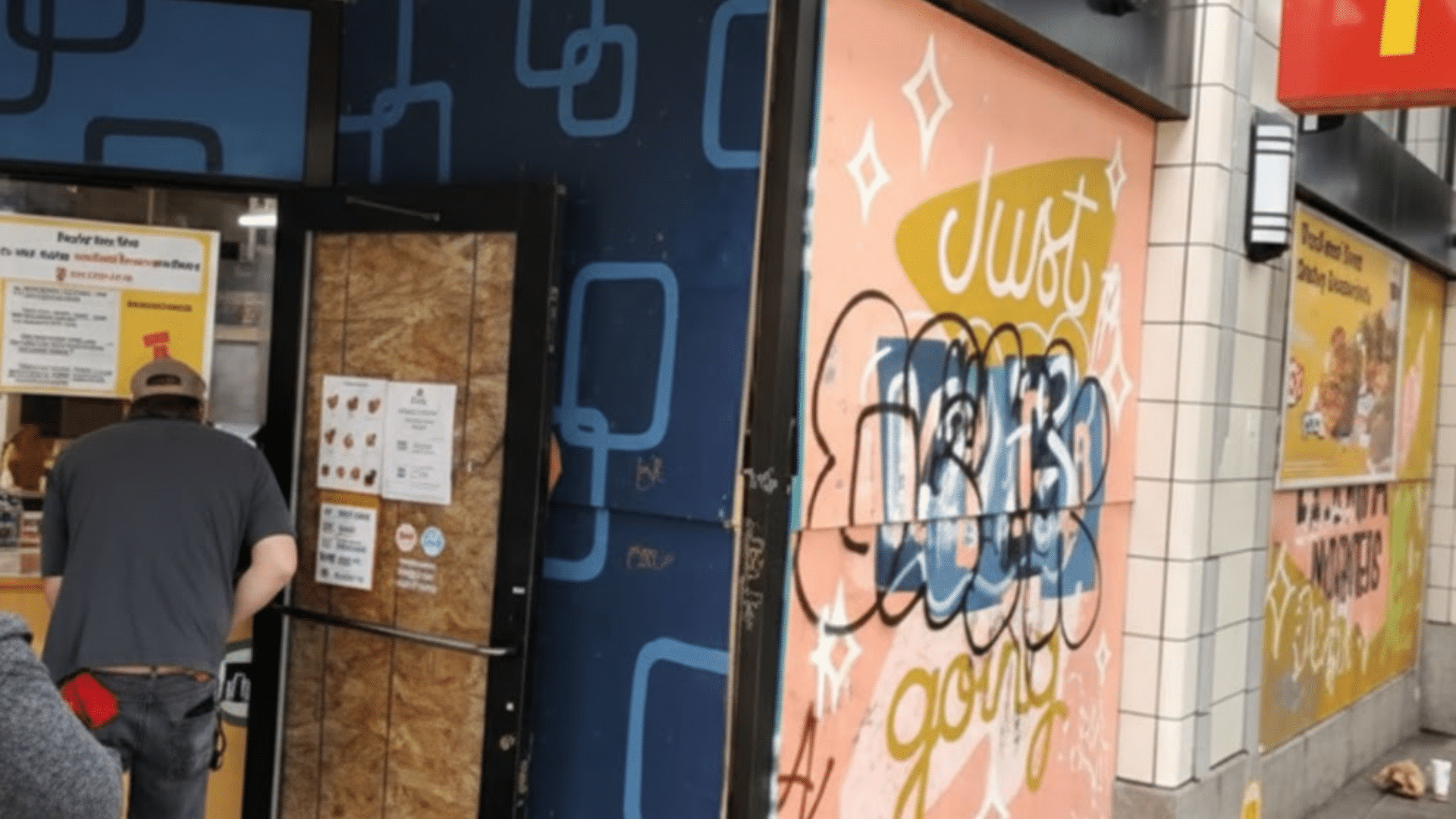
The physical transformation of the restaurant tells the story before a word is spoken. The double glass doors that once welcomed customers are now permanently propped open but sealed off with thick plywood. Vandalism made transparency impossible. The dining room closed years ago, initially under the cover of Covid-era restrictions. But it never reopened. Instead, management installed a reinforced service hatch to create a barrier between employees and the street. Customers must stand outside to order, exposed to everything happening along the sidewalk. This is not a drive-thru or a temporary fix. It is a permanent redesign shaped by fear. The message is clear. Inside is off limits, not because of corporate strategy, but because normal operations no longer feel survivable.
‘McStabby’s’ and a Grim Local Reputation
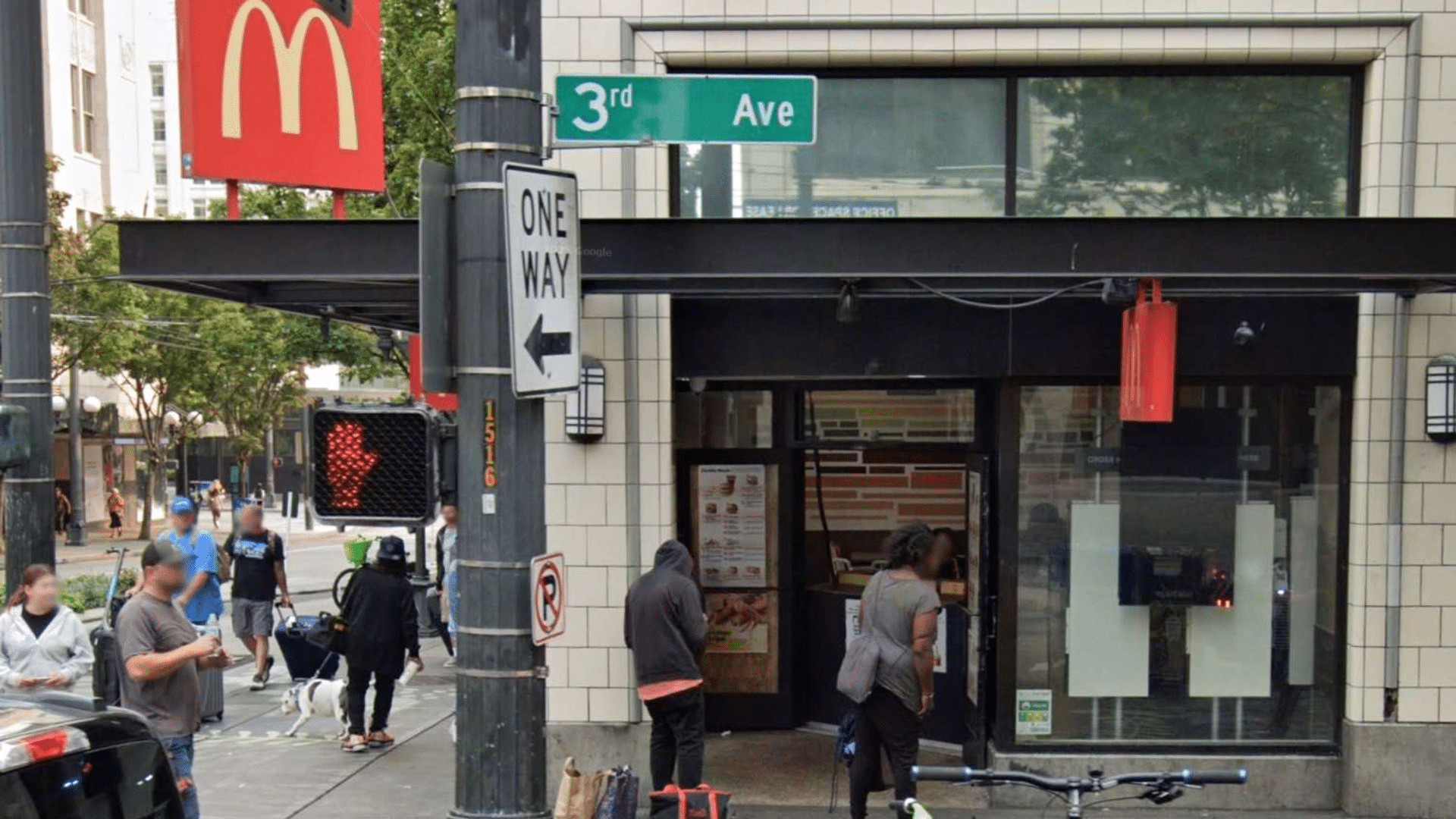
Seattle locals have given the restaurant a nickname that says everything. They call it “McStabby’s.” The name reflects years of violence clustered around the block, an area known as “The Blade,” the stretch of 3rd Avenue between Pine and Pike Streets. People ordering food must navigate crowds of vagrants and drug users who linger outside day and night. A man named Nick, 45, told reporters the situation gets far worse after dark. He described frequent assaults and robberies and said he always leaves before nightfall. Once homeless himself, Nick said the corner is still defined by open drug use and unpredictable attacks, turning a simple meal into a calculated risk.
Fentanyl, Filth, and a Collapsing Streetscape
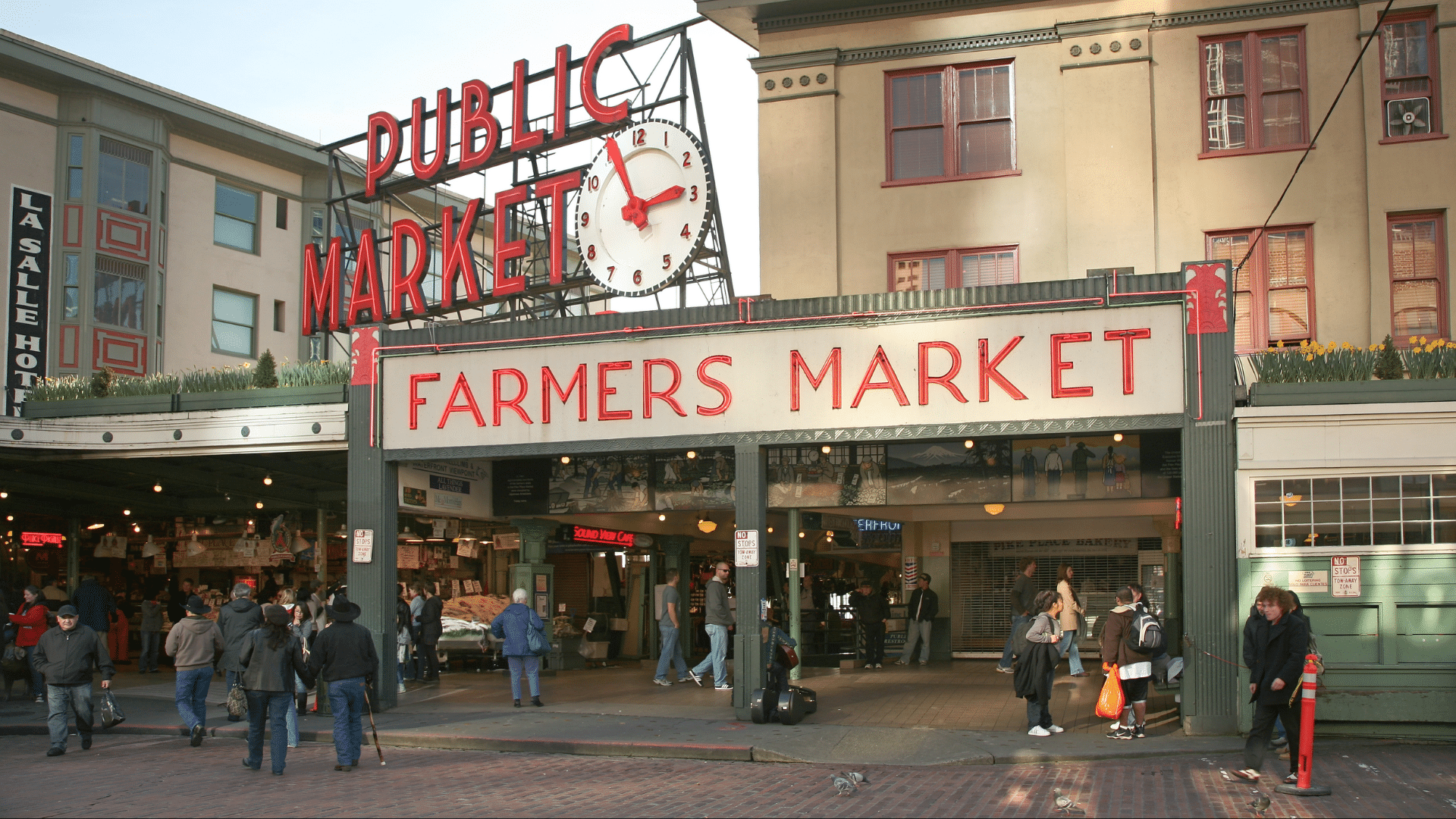
Just blocks from Pike Place Market, one of Seattle’s most famous tourist attractions, the contrast is shocking. The surrounding streets are littered with trash, bodies slumped over from fentanyl use, and people barely conscious on the sidewalks. Many addicts appear incapacitated in plain view of businesses. Locals describe the area as a shadow of what it was during Seattle’s booming 1990s era. Once-clean streets now feel abandoned. The McDonald’s sits in the middle of this collapse, forced to operate as a fortress rather than a family restaurant. The proximity to iconic landmarks only sharpens the sense that something has gone deeply wrong in the city’s core.
The Shooting That Changed Everything
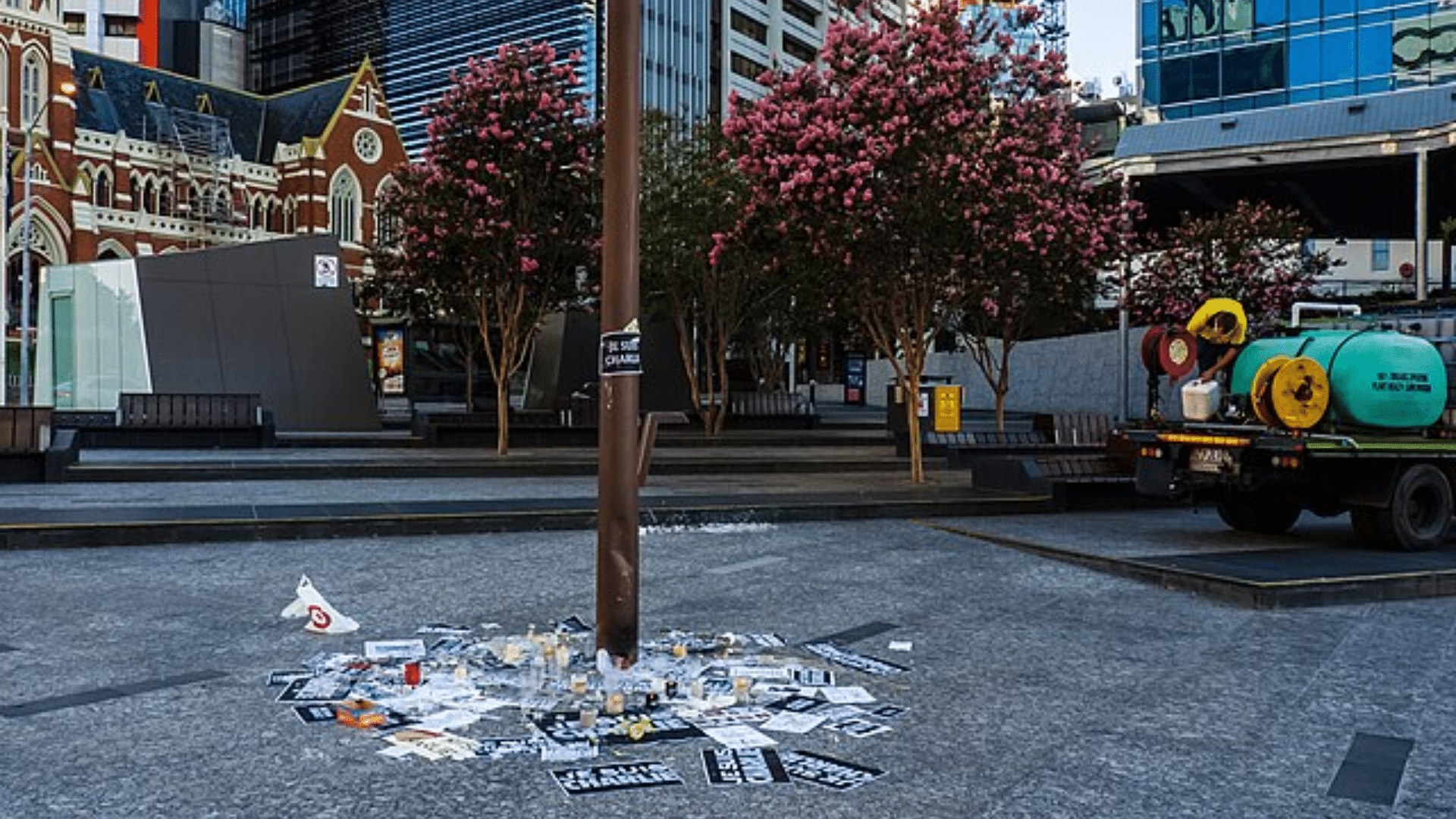
For many, the breaking point came in January 2020. A shooting just outside the McDonald’s killed one woman and injured seven others, including a nine-year-old boy. A local witness recalled watching the woman die near a lamppost outside the restaurant. Bloodshed at that scale shattered any illusion of safety. Not long after, the dining room closed for good. While McDonald’s initially cited Covid precautions, employees and locals say the violence made reopening impossible. The shooting became a grim reference point, a moment when fear stopped being hypothetical and became permanent. Since then, the restaurant has existed in survival mode, adapting to chaos rather than resisting it.
Workers Trapped Between the Counter and the Street
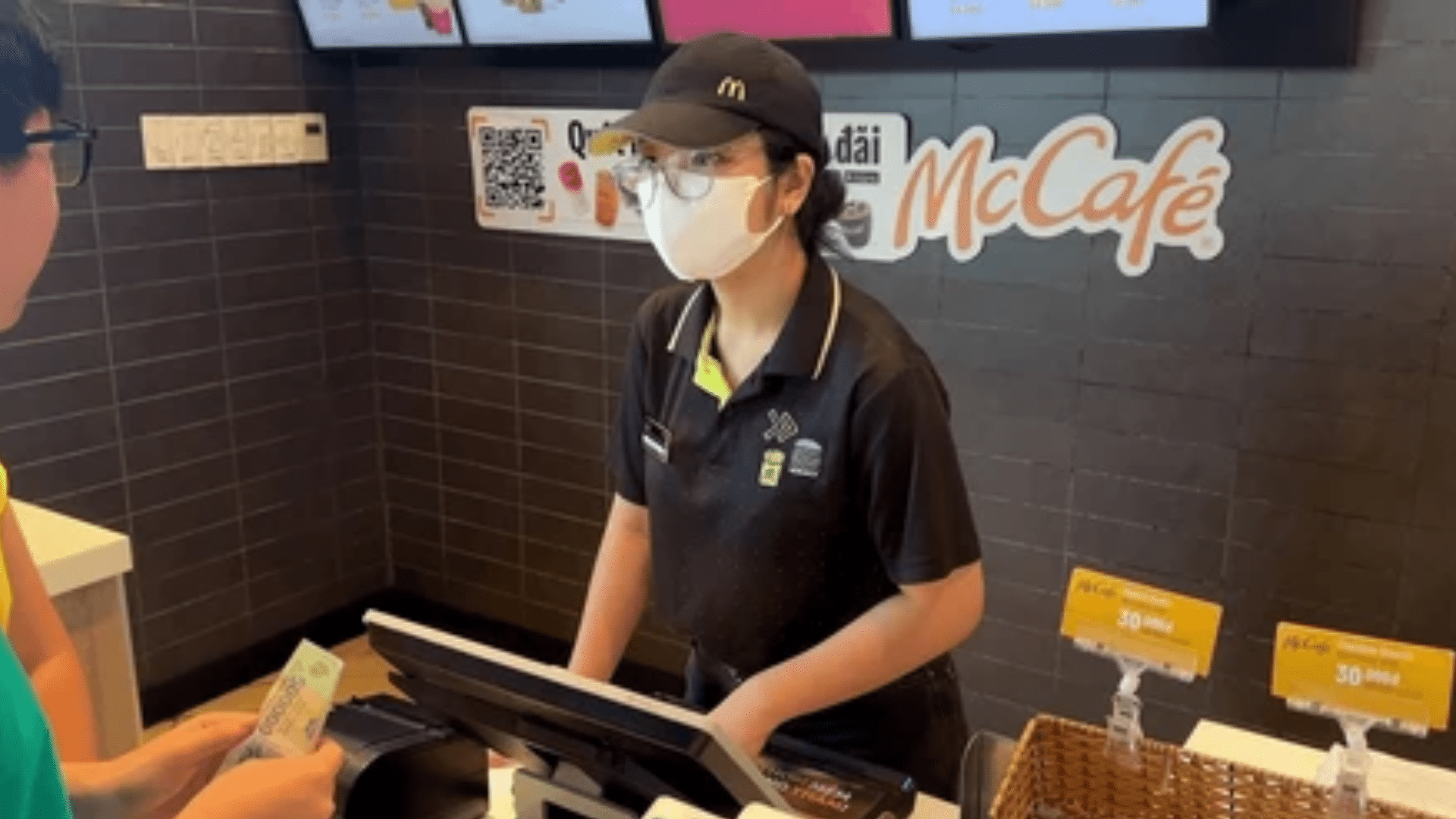
Employees describe conditions that sound more like a crisis zone than a workplace. One young worker said he has witnessed multiple physical assaults directly outside the hatch. People scream, fight, and collapse just feet away. He recalled a terrifying moment when a homeless man vaulted over the serving hatch, threatened staff, and grabbed food before fleeing. No one called the police. The worker said it felt pointless. He also claimed he has been followed home multiple times by people trying to rob him for money or clothing. Despite wanting more police presence, his tone was resigned. The danger feels normalized, not shocking.
Police Presence That Changes Little
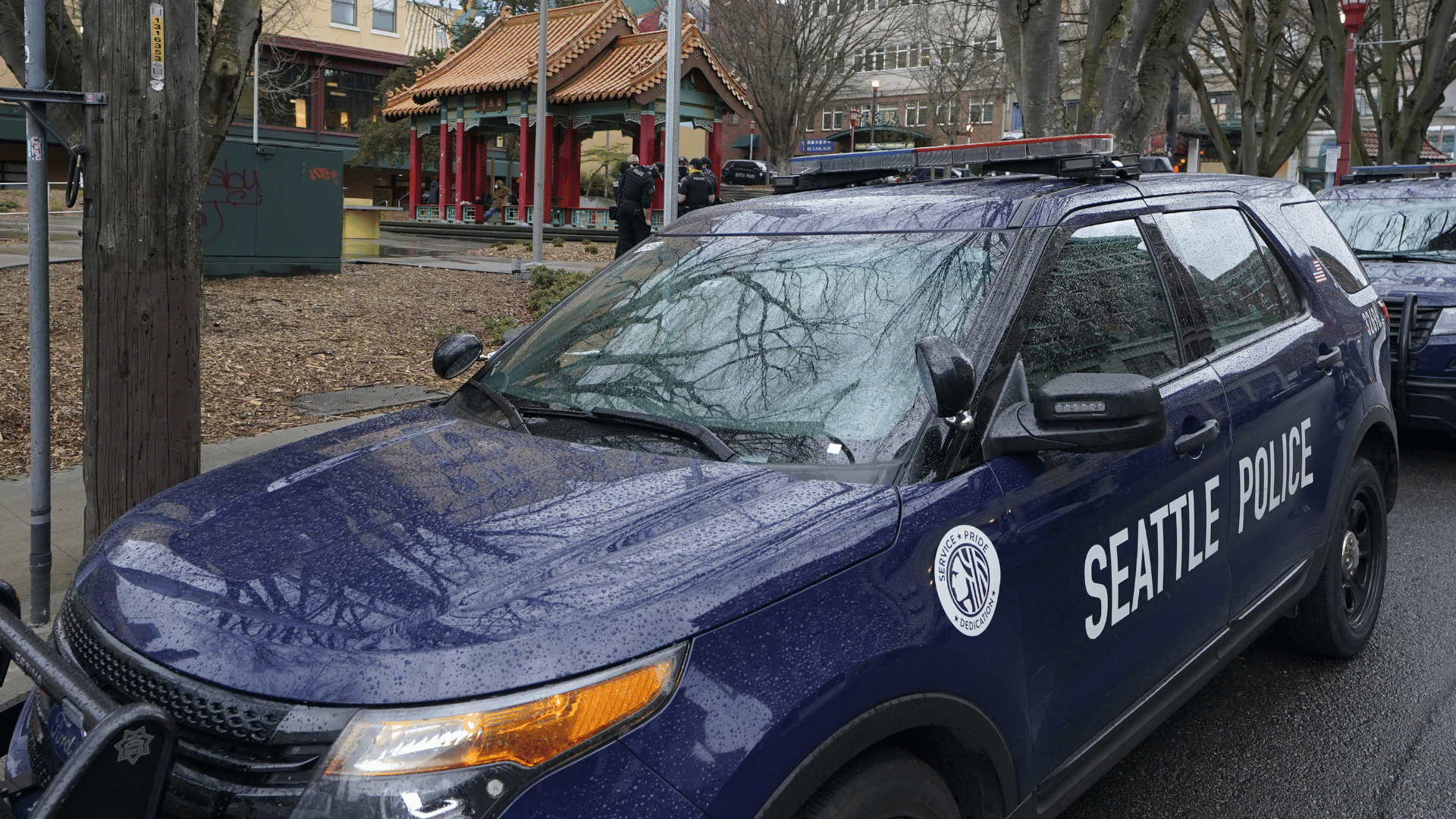
Seattle police officers do patrol the area, but even they speak bluntly about the limits of enforcement. Officers said the city sprays the street with bleach and water up to three times a day to temporarily disperse people. The effect is brief. One officer casually mentioned witnessing three stabbings in front of the McDonald’s since the start of the year. Violence among the homeless population, he said, is constant. Private security guards hired by nearby businesses are frequently attacked as well. The officers’ calm tone suggested resignation rather than urgency. Arrests feel temporary. Chaos quickly returns.
The LEAD Program and Dropped Drug Charges
A major reason cited by officers is policy. Under a January 1 order from Seattle Police Chief Shon Barnes, most drug cases are referred to the Law Enforcement Assisted Diversion, or LEAD, program. Instead of jail, offenders are diverted into voluntary treatment and services. Critics, including the Seattle Police Officers Guild, argue the program lacks accountability and teeth. One officer admitted many people he arrests for drugs are already enrolled. In practice, that often means charges are dropped. Supporters say LEAD reduces incarceration and addresses addiction. Critics say it creates a revolving door that leaves streets like The Blade in constant turmoil.
A Fast-Food Window Into a Bigger Crisis

This McDonald’s is not just a strange outlier. It has become a visual shorthand for Seattle’s struggles with homelessness, addiction, and public safety. A global brand felt compelled to barricade itself from the public. Customers still line up for food, but they do so behind Plexiglass, stepping around people in crisis. Tourists see it. Locals live it. The restaurant remains open because demand exists, but its form reflects a city adapting downward. The question is no longer why the hatch exists. It is why conditions reached a point where a hatch felt like the only option.
The Uncomfortable Question Seattle Faces
The McDonald’s on 3rd and Pine forces an uncomfortable reckoning. Is this an example of compassionate policy gone wrong, or a tragic but necessary response to complex social problems? City leaders defend diversion programs and harm reduction strategies. Critics point to boarded-up doors, daily violence, and workers who feel abandoned. The restaurant will keep serving burgers through its hatch, a small window cut into a much larger failure. Whether Seattle sees this as a warning or accepts it as the new normal will shape the future of its downtown. For now, one of America’s most recognizable restaurants operates like a bunker, and that reality is hard to ignore.

