Easy Homemade Pasta Guide for Beginners (2026)

What if the most impressive dish you could serve at a dinner party only needed two ingredients and zero culinary training to pull off? Go ahead, let that sink in for a second!
If you’ve ever stood in your kitchen, stared at a bag of flour, and quietly backed away, you’re not alone. The fear of a floury countertop disaster, the confusion between 00 flour and all-purpose, the dread of dough that turns out like rubber or mush, it’s real, it’s valid, and it stops so many people from ever trying. But here’s the thing: homemade pasta isn’t a culinary exam. It’s a two-ingredient kitchen party, and you are so ready to host it.
This guide is packed with easy homemade pasta recipes for beginners that are genuinely foolproof, wildly fun, and seriously shareable. You’ll learn exactly how to nail your dough texture every single time, decode the flour mystery once and for all, and walk away with a bowl of silky, gorgeous, restaurant-quality noodles you made with your own hands. Get ready to transform your kitchen into the most delicious place in the house!
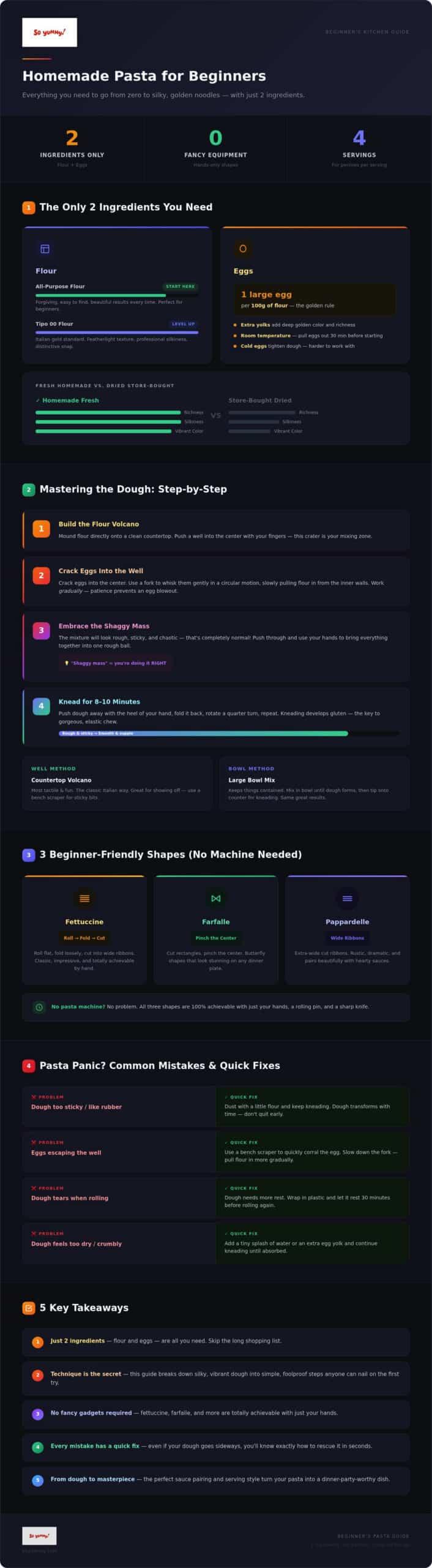
Key Takeaways
- All the easy homemade pasta recipes for beginners in this guide require just two ingredients — flour and eggs — so you can skip the long shopping list and get straight to the fun.
- The secret to silky, vibrant pasta dough is all in the technique, and this guide breaks it down into simple, foolproof steps anyone can nail on the very first try.
- You don’t need a single fancy gadget to create stunning pasta shapes — fettuccine, farfalle, and more are totally achievable with just your hands and a little confidence.
- Every common beginner mistake has a quick, easy fix, so even if your dough goes sideways, you’ll know exactly how to rescue it in seconds.
- From the perfect pairing sauce to serving it in style, this guide takes your homemade pasta all the way from dough to a dinner-party-worthy masterpiece!
The Magic of 2 Ingredients: Why Homemade Pasta is a Total Game-Changer
Two ingredients. That’s it. Flour and eggs are the entire shopping list standing between you and a bowl of silky, golden, restaurant-worthy pasta. No exotic pantry raids, no complicated prep work, no culinary degree required. Just two humble ingredients that, when combined with a little enthusiasm, create something genuinely spectacular.
And the flavor difference? It’s not subtle. Fresh homemade pasta has a richness, a tenderness, and a depth that dried store-bought noodles simply can’t replicate. The texture is silkier, the color is more vibrant, and the taste is so satisfying it feels almost unfair. This is the kind of dish that makes guests put down their forks mid-bite just to ask, “Wait, you made this yourself?”
Cost-wise, it’s a total win. A batch of fresh pasta that serves four people costs just a handful of eggs and a cup of flour. That’s a gourmet dinner for pennies per serving. Luxury doesn’t have to be expensive, and this is proof. These easy homemade pasta recipes for beginners are genuinely accessible to everyone.
Think of your kitchen as a creative sanctuary, not a stress zone. Making pasta by hand is tactile, meditative, and honestly a little magical. It’s the kind of activity that turns an ordinary Tuesday into a So Yummy experiment the whole family wants to be part of.
Flour Power: All-Purpose vs. Tipo 00
Start with standard all-purpose flour. It’s forgiving, easy to find, and produces beautiful results every single time. Once you’re feeling confident, level up to Tipo 00 flour, the gold standard for silkiness that gives pasta that professional Italian snap and featherlight texture. Think of all-purpose as your brilliant starting point and 00 as your exciting next chapter.
The Egg Factor: Richness and Color
Room-temperature eggs are your secret weapon. Cold eggs tighten the dough and make it harder to work with, while room-temperature eggs blend in smoothly, creating a more elastic, pliable dough. The golden rule for easy homemade pasta recipes for beginners is beautifully simple:
- 1 large egg per 100g of flour, every single time
- Extra egg yolks add that signature deep golden glow and extra richness
- Room temperature matters, so pull your eggs out 30 minutes before you start
That stunning amber color you see in fresh pasta? That’s pure egg yolk doing its thing. Beautiful, delicious, and totally achievable in your own kitchen right now!
Mastering the Dough: A Foolproof Step-by-Step Guide
Here’s where the real magic happens. You’ve got your flour, you’ve got your eggs, and now it’s time to turn those two humble ingredients into something genuinely spectacular. Don’t overthink it. The process is rhythmic, tactile, and honestly one of the most satisfying things you’ll ever do in your kitchen.
Start by mounding your flour directly onto a clean countertop. Use your fingers to push a well into the center, creating what looks like a little flour volcano. That crater is your mixing zone. Crack your eggs straight into the middle, then use a fork to whisk them gently in a circular motion, slowly pulling flour in from the inner walls as you go. Work gradually. Patience here prevents the dreaded egg blowout where your liquid escapes the walls and races across the counter.
At first, the mixture looks rough, sticky, and a little chaotic. That’s completely normal! This is the “shaggy mass” stage, and it’s actually a sign you’re doing everything right. Push through it. Use your hands to bring everything together into one rough ball, then start kneading.
Kneading is where the gluten develops, and gluten is what gives your pasta that gorgeous, elastic chew. Push the dough away from you with the heel of your hand, fold it back, rotate a quarter turn, and repeat. Keep that rhythm going for a solid eight to ten minutes. The dough will transform from rough and sticky into something smooth, supple, and deeply satisfying to hold.
The ‘Well Method’ vs. The Bowl Method
The countertop well is the most fun, most tactile way to make pasta dough, and it’s the method you’ll want to show off at your next So Yummy kitchen experiment. But if you’d rather keep things contained, a large bowl works beautifully too. Mix everything in the bowl until a rough dough forms, then tip it onto the counter for kneading. Either way, keep a bench scraper nearby. It’s a total game-changer for lifting sticky bits off the counter without losing any precious dough.
How to Tell When Your Dough is Ready
Two simple checks tell you everything you need to know:
- The Poke Test: Press a finger into the dough. If it springs back slowly and playfully, it’s ready. If it stays indented, keep kneading.
- The Smooth Surface Check: Your dough should look silky, uniform, and almost glossy. Rough or lumpy means more kneading time.
- The 30-Minute Rest: Wrap your dough tightly in plastic wrap and let it rest at room temperature. This step lets the gluten relax, making the dough dramatically easier to roll out thin and even.
These easy homemade pasta recipes for beginners become genuinely foolproof the moment you respect that rest period. Skip it, and your dough fights back. Honor it, and you’re rolling out silky sheets like a pro. Ready to shape something beautiful? Explore more kitchen inspiration at So Yummy and keep that creative energy flowing!
3 Beginner-Friendly Shapes You Can Make Without a Machine
Your dough is rested, silky, and ready to shine. Now comes the truly exciting part: shaping it into something stunning. No pasta machine? Absolutely no problem. These three shapes are the ultimate easy homemade pasta recipes for beginners because they require nothing but your hands, a rolling pin, and a sharp knife. Each one is genuinely achievable on your very first attempt, and each one looks wildly impressive on the plate.
Fettuccine: The Hand-Cut Classic
Roll your rested dough out with a standard rolling pin, working from the center outward in every direction. Aim for a thickness of roughly two to three millimeters, thin enough to see the shadow of your hand underneath it. Dust the sheet generously with flour, then fold it loosely into a flat roll, like a soft scroll. Slice across the roll in even strips about half a centimeter wide. Shake the ribbons loose, toss them in a little extra flour, and watch as they unfurl into gorgeous golden fettuccine right in front of you. That flour toss is non-negotiable. It keeps every ribbon separate, silky, and tangle-free until it hits the boiling water.
Farfalle: The Most Photogenic Pasta
This is the shape that breaks the internet every single time. Roll your dough to the same thin sheet, then cut it into small rectangles, roughly three centimeters by five centimeters. A fluted pastry wheel gives you those beautiful zigzag edges, but a regular knife works perfectly too. Now for the magic moment: pinch each rectangle firmly in the center with your thumb and index finger, pressing all the way through. That one little pinch creates the iconic butterfly bow-tie shape instantly. Farfalle is genuinely ideal for chunky, vibrant vegetable sauces because the folds catch every bit of sauce and hold it beautifully in each bite.
Ready to take things up a notch? This is where the So Yummy twist comes in. Blend a small handful of fresh spinach with your eggs before mixing the dough for a vivid, emerald-green pasta that looks like it belongs in a professional kitchen. Swap in a splash of beet juice instead for a deep, rosy pink that’s absolutely breathtaking in a bowl. Natural colors, zero artificial anything, and a finished dish so visually stunning it practically begs to be photographed and shared.
- Spinach pasta: Blend two tablespoons of spinach puree with your eggs for a rich green color
- Beet pasta: Replace one egg with two tablespoons of beet juice for a bold, vibrant pink
- Orecchiette: Roll small pea-sized pieces of dough and drag a butter knife across each one, curling it over your thumb to create a tiny cupped “little ear” shape that holds chunky sauces brilliantly
Three shapes, zero machines, infinite bragging rights. These are the easy homemade pasta recipes for beginners that turn an ordinary kitchen session into a full-on So Yummy creative moment worth sharing with everyone you know!
Pasta Panic? How to Fix Common Beginner Mistakes
Every beginner hits a snag. Dough that crumbles, dough that sticks, dough that springs back like it has somewhere better to be. None of it means you’ve failed. It just means you need a quick fix, and every single one of them is stupidly simple.
Dry, crumbly dough is the most common cry for help in any first-time pasta session. The fix? Add water. Literally just one teaspoon at a time, working it in with your hands until the dough comes back together into something smooth and pliable. Don’t dump it all in at once. Slow and steady wins this one every time.
Sticky dough is the opposite problem, and the solution is equally straightforward. Dust your surface and your hands with a little flour, then keep kneading. The stickiness disappears as the flour absorbs and the gluten develops. Easy homemade pasta recipes for beginners always recommend keeping a small bowl of flour nearby for exactly this reason. Think of it as your rescue kit, always within arm’s reach.
Then there’s the “rubber band” effect, that deeply frustrating moment when you roll your dough out and it immediately shrinks back to half its size. This isn’t a failure. It’s just over-developed, tense gluten telling you it needs more rest. Wrap it back up, give it another ten minutes, and try again. It’ll roll out beautifully.
The Science of the Rest Period
Skipping the rest is the single biggest mistake beginners make, and the consequences show up immediately on the rolling pin. During those thirty minutes of wrap-and-wait, the gluten strands relax and the flour fully hydrates, turning a tight, resistant dough into something silky, cooperative, and genuinely dreamy to work with. Patience isn’t just a virtue here; it’s the secret ingredient that transforms stubborn dough into elastic, rollable perfection.
Cooking Fresh vs. Dried Pasta
Fresh pasta cooks fast. Shockingly fast. Drop your noodles into generously salted boiling water and start watching immediately, because three minutes is often all it takes. That water should taste genuinely salty, seasoned boldly enough that it flavors the pasta from the inside out as it cooks.
- The 3-minute rule: Fresh pasta is done far sooner than dried, so taste early and taste often
- The float test: When your noodles rise to the surface and bob gently, that’s your al dente signal right there
- Salt like the sea: Under-salted water produces flat, forgettable noodles no matter how perfect your dough was
Storage is simpler than you’d think. Dust your shaped pasta generously with flour, nest it into loose little bundles, and refrigerate it on a lightly floured tray for up to two days. For longer storage, freeze the floured bundles on a tray first, then transfer them to a bag once solid. They cook straight from frozen in about four minutes flat.
Want more foolproof kitchen wins exactly like this one? Discover more So Yummy recipes and creative cooking inspiration and keep that momentum going!
Elevate Your Pasta Party: The So Yummy Finale
You’ve made the dough, shaped the noodles, and survived every sticky, floury, gloriously chaotic moment of it. Now comes the part where everything clicks into place: the sauce, the table, the people, and the photographs that prove you absolutely crushed it. This is your So Yummy finale, and it deserves to be celebrated properly.
Simple Sauces for Handmade Noodles
Fresh pasta is delicate, silky, and genuinely stunning on its own, which means heavy, chunky sauces can actually work against you here. The golden rule? Let the dough shine. Light, glossy sauces that cling to the noodles without smothering them are your best friends right now.
- Brown Butter and Sage: Melt butter in a pan over medium heat until it turns golden and smells nutty, then drop in fresh sage leaves and let them crisp for thirty seconds. That’s your sauce. Pour it straight over your fettuccine, finish with a shower of Parmesan, and watch every single person at the table go completely silent. Five minutes, zero stress, maximum drama.
- Classic Aglio e Olio: Gently warm sliced garlic in good olive oil until it turns pale gold and fragrant, then toss it through your hot noodles with a splash of pasta water and a pinch of chili flakes. Simple, electric, and absolutely timeless. This is the sauce that makes easy homemade pasta recipes for beginners taste like a Roman trattoria experience right in your own kitchen.
Both options take less time to make than it takes to boil the water. That’s the So Yummy way: maximum payoff, minimum fuss.
Host a Pasta Making Night
Here’s a truth nobody tells you: pasta is even better when you make it with other people. Set up simple stations around your kitchen counter, one spot for kneading, one for rolling, one for cutting, and let everyone claim their territory. Hand your guests a rolling pin and watch the magic happen.
The wiggly noodles, the lopsided farfalle, the fettuccine that’s somehow three centimeters wide? Those are the best ones. Every imperfect noodle has a story, a laugh attached to it, a memory baked right into the dough. That’s what makes a pasta night genuinely unforgettable rather than just another dinner.
For the photographs, natural light is everything. Shoot from directly above for that stunning flat-lay of floury chaos, or get low and close to capture the golden ribbons in a bowl. A rustic wooden board, a linen napkin, and a tiny sprinkle of extra flour in the background? Instant aesthetic. Your feed will thank you.
This is the So Yummy spirit in its purest form: joyful, creative, wildly shareable, and completely accessible to absolutely everyone. Ready to keep the kitchen creativity flowing? Explore more So Yummy kitchen hacks and tools and turn every meal into your next delicious experiment!
Your Pasta Journey Starts Right Now
Two ingredients, zero intimidation, and one seriously delicious result. That’s the whole promise of easy homemade pasta recipes for beginners, and every floury, golden, gloriously imperfect noodle you make proves it’s absolutely true.
You’ve got the dough technique locked in, the shapes mastered, and the fixes ready for anything that goes sideways. The only thing left? Actually doing it. Pull out that flour, crack those eggs, and trust the process completely.
Millions of home cooks have already discovered that the So Yummy approach to cooking transforms ordinary ingredients into something worth sharing, worth photographing, and worth making again and again. The joy is real, the results are stunning, and the kitchen confidence you build with every batch? That’s yours to keep forever.
So roll up your sleeves, dust your countertop, and make tonight the night your homemade pasta story begins. Ready to cook? Grab your So Yummy kitchen gear and start creating!
Your best bowl of pasta is closer than you think. Go get it!
Frequently Asked Questions About Easy Homemade Pasta Recipes for Beginners
What is the best flour for homemade pasta for beginners?
All-purpose flour is your absolute best starting point. It’s forgiving, widely available, and produces genuinely beautiful results without any fuss. Once you’ve made a few batches and feel comfortable with the process, Tipo 00 flour is worth exploring for an even silkier, more delicate texture. But honestly? Your first bowl of fresh pasta made with standard all-purpose flour will still blow every dried noodle out of the water.
Do I really need a pasta machine to make homemade pasta?
Nope, not even a little bit! A rolling pin and a sharp knife are genuinely all you need to create stunning fettuccine, farfalle, and orecchiette at home. The key is rolling your rested dough thin enough to see a shadow through it, roughly two to three millimeters. Machines are a fun upgrade down the road, but they’re never a requirement for easy homemade pasta recipes for beginners.
How long does fresh homemade pasta last in the fridge?
Fresh pasta keeps beautifully in the fridge for up to two days when stored properly. Dust your shaped noodles generously with flour, arrange them in loose nests on a lightly floured tray, and cover everything well. For longer storage, freeze those floured nests on a tray first until solid, then transfer them to a sealed bag. Frozen fresh pasta cooks straight from frozen in about four minutes flat, which makes it a brilliant meal-prep win.
Why is my homemade pasta dough so tough and hard to roll?
Nine times out of ten, tough dough just needs more rest time. When gluten is over-worked and under-rested, it contracts and fights back against the rolling pin like a rubber band. Wrap your dough back up tightly, leave it for another ten to fifteen minutes at room temperature, and try again. The difference is genuinely remarkable. Tough dough can also mean slightly too much flour crept in during kneading, so dust your surface lightly rather than heavily next time.
Can I make homemade pasta dough in a food processor?
Yes, absolutely! Add your flour and eggs to the food processor and pulse in short bursts until the mixture resembles coarse, sandy crumbs. Tip it onto your counter and knead by hand for just two to three minutes until smooth. The food processor handles the initial mixing beautifully, cutting your prep time down significantly. That said, the full hand-kneading method is deeply satisfying and gives you a much better feel for when your dough is truly ready.
Is it cheaper to make your own pasta at home?
Fresh homemade pasta costs just a handful of eggs and a cup of flour per batch, making it one of the most budget-friendly meals you can put on the table. The exact savings depend on what you’d normally buy, but the cost difference between homemade and fresh store-bought pasta is significant. Dried pasta from a box is already inexpensive, but homemade fresh pasta delivers a flavor and texture upgrade that genuinely feels like a luxury meal for everyday ingredient costs.
What happens if I don’t let my pasta dough rest?
Skipping the rest period makes everything dramatically harder. Without that thirty-minute window, the gluten stays tight and tense, meaning your dough will shrink back every time you try to roll it thin. The flour also hasn’t fully hydrated yet, so the texture stays rougher and less cooperative than it should be. Rest isn’t optional; it’s the step that transforms stubborn, springy dough into the silky, rollable sheets every easy homemade pasta recipe for beginners promises.
How much salt should I add to my pasta water?
Your pasta water should taste genuinely salty, bold enough that you notice it immediately. A commonly used guideline is roughly one to two teaspoons of salt per liter of water, but tasting as you go is always the most reliable method. Under-salted water produces flat, forgettable noodles no matter how perfect your dough was, because fresh pasta absorbs flavor directly from the cooking water as it boils. Salt the water generously and your finished dish will taste seasoned all the way through.