‘Buy Now, Pay Later’ Is Taking Over Grocery Carts, and It Could Drive Up Prices for Everyone
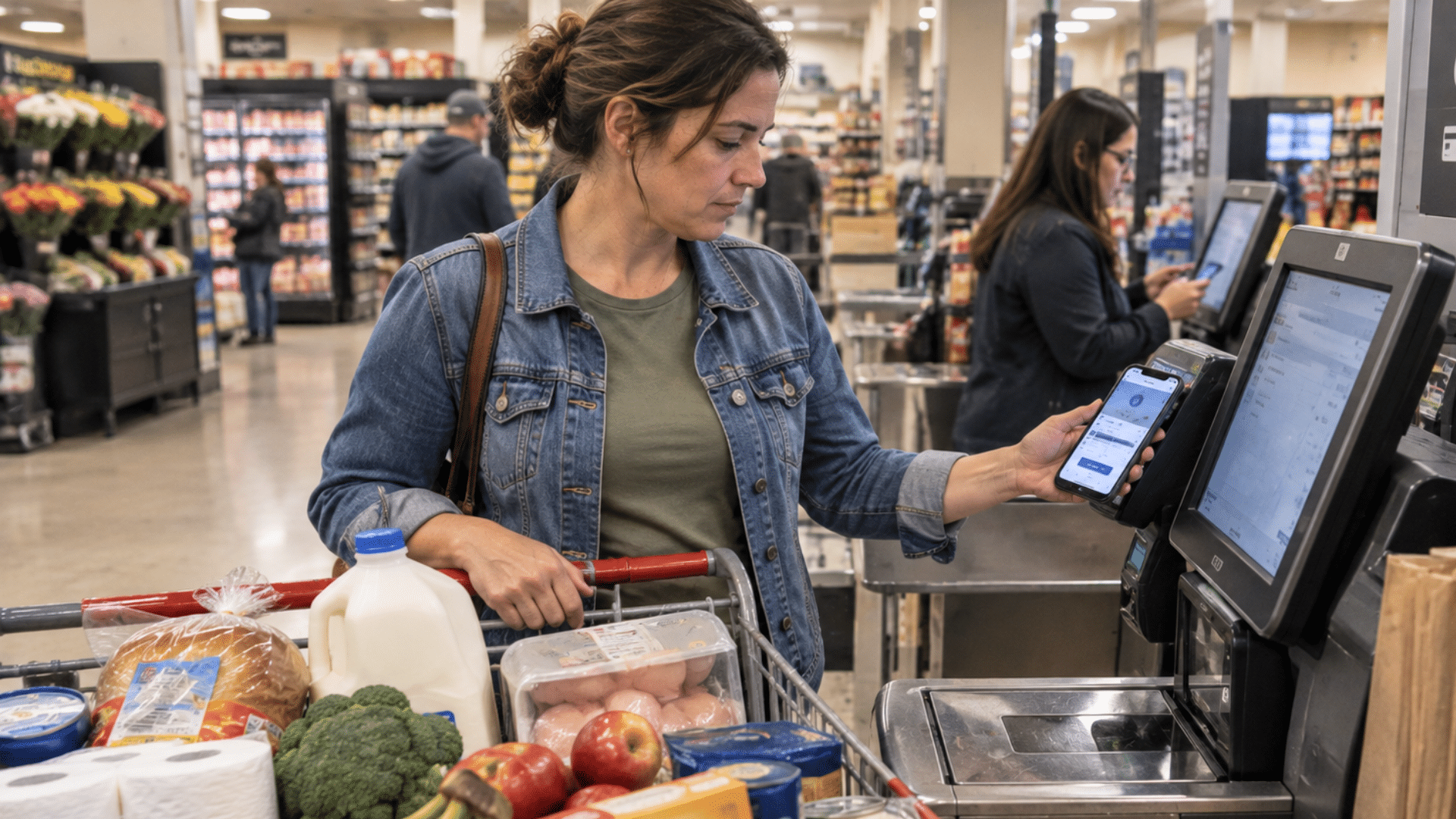

Grocery prices are supposed to come down to supply, demand, and inflation, not to how the person ahead of you in line chose to pay. New research suggests that assumption is starting to break down. As more shoppers finance everyday purchases like milk and eggs through apps like Klarna and Affirm, researchers say the ripple effects could quietly raise prices for everyone at the register, including people who never touch buy now, pay later at all.
The shift toward financing groceries has happened fast. A LendingTree survey of more than 6,000 U.S. consumers, published in July, found that 29% of Americans now report using buy now, pay later loans for groceries, nearly double the 14% who said the same just two years earlier. Roughly 91.5 million Americans overall now use apps like Klarna, Affirm, and Afterpay to finance purchases of some kind.
A new study is trying to quantify what that shift might mean. Researchers at Washington University in St. Louis built an economic model examining what happens once buy now, pay later becomes routine for basic necessities rather than big discretionary purchases like furniture or gaming consoles, the categories the payment option was originally designed around when it first launched.
The Study Isn’t Proof Prices Rose. It’s a Model of Why They Might.
The research, led by professor Panos Kouvelis at WashU’s Olin Business School alongside co-authors Naveed Chehrazi and Wenhui Zhao, is forthcoming in the journal Management Science. Kouvelis frames the core insight simply: the buy now, pay later button doesn’t target how much a shopper is willing to pay. “It targets what you are able to pay right now.” That distinction matters for how retailers set prices.
Buy now, pay later providers like Klarna, Affirm, and Afterpay pay retailers upfront, then collect installments from shoppers themselves, taking a merchant fee out of each transaction. To offset that fee, some retailers raise their sticker prices across the board, meaning customers who pay in full can end up subsidizing customers who finance their purchases. It is worth being precise here: this is a theoretical economic model, not measured evidence that grocery prices have already risen because of BNPL.
Why groceries specifically? The answer comes down to profit margins. Buy now, pay later was originally built around big discretionary purchases like furniture or gaming consoles, items with high enough margins that retailers could absorb the merchant fee and still turn a solid profit. Groceries operate on razor-thin margins by comparison, which means the same fee structure hits much harder once it gets applied to something as basic as a weekly shopping trip.
‘More Sales Is Not the Same as More Profit’
The researchers found a genuinely counterintuitive effect once they ran the numbers. Even when buy now, pay later increases the total number of products a store sells, the retailer’s effective profit, what it actually keeps after financing costs, can still decline. “More sales is not the same as more profit,” said co-author Naveed Chehrazi, an assistant professor of supply chain, operations, and technology. Inventory can shrink as a result too.
There is a separate risk here too. Buy now, pay later remains largely unregulated, and these companies have not consistently reported debt to credit agencies. That gap lets some consumers stack five to ten separate loans at once without any single lender seeing the full picture. LendingTree found that 47% of BNPL users were late on a payment in the past year, even though the average individual debt is relatively small, around $135.
None of this sounds catastrophic looking at any single loan alone. It is the accumulation across five, six, or ten separate small loans, invisible to any one lender, that turns manageable financing into something closer to quiet, hard-to-track overborrowing. Understanding why grocery shoppers are reaching for this option in growing numbers explains the rest of this picture, and why economists see it as a warning sign.
It Started With Furniture. Now It’s Paying for Milk and Eggs.
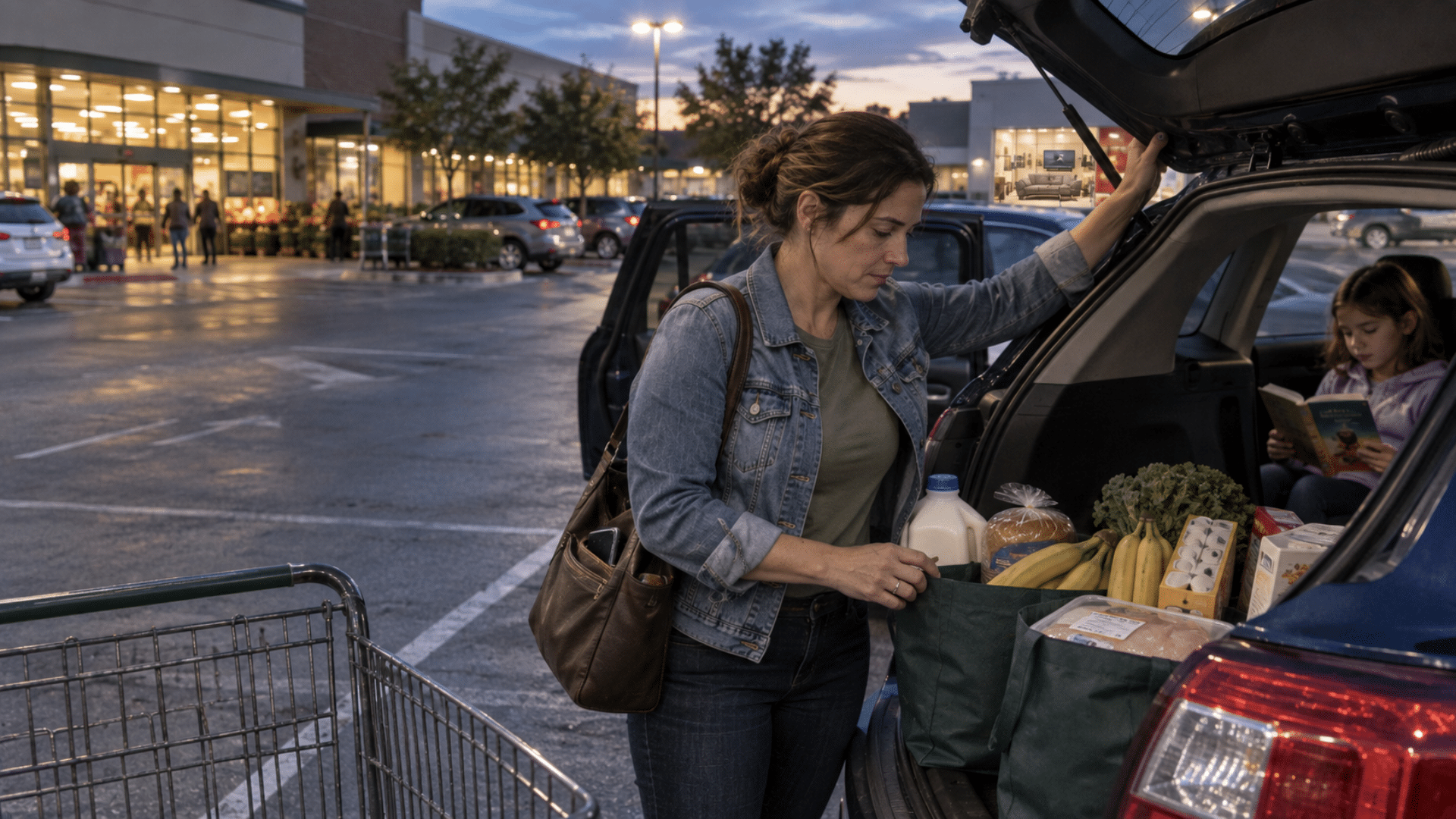
The shift toward financing groceries did not happen in a vacuum. It is unfolding alongside a broader affordability squeeze: rising healthcare and childcare costs, plus inflation that has stayed stubbornly high since the pandemic. Kouvelis has described real concern about people living close to the financial edge who end up overborrowing quietly across multiple small loans, with no single lender or regulator seeing the full pattern until it eventually catches up with them.
It’s worth keeping this trend in proportion, too. Buy now, pay later purchases still make up only about 1% of total U.S. credit card transactions, according to the Federal Reserve Bank of Richmond, even after growing 20% between 2021 and 2025. The industry itself has been under real financial strain lately; Klarna’s stock suffered its worst week ever in August after the company slashed its full-year guidance, a reminder that BNPL’s own business model is not exactly thriving either.
What started as a financing tool for couches and game consoles has quietly become something people lean on just to get through an ordinary grocery run. The modeling here proves nothing yet. But it does suggest the cost of that shift, if it plays out the way the model predicts, would not stay contained to the people actually using buy now, pay later at checkout.