Major Meat Recall Hits 9 Brands Nationwide Over Unsafe Storage Concerns

That pack of hot dogs or bacon sitting in your refrigerator might need a second look. More than 1.5 million pounds of ready-to-eat meat and poultry are being recalled nationwide after a storage problem raised serious food safety concerns. The recall covers everything from hot dogs and bacon to chicken sausages, ham, and turkey products sold under nine different brands.
Massachusetts-based Kayem Foods is recalling approximately 1,584,361 pounds of products, according to an October 17, 2026, announcement from the U.S. Department of Agriculture’s Food Safety and Inspection Service (FSIS). The agency classified the recall as Class I, its most serious category, reserved for situations where consuming an affected product carries a reasonable probability of serious health consequences or death. The products were manufactured between approximately March 31 and October 7, 2026.
The trouble began with a customer complaint on October 1. A retailer reported receiving products that were unusually warm upon delivery, prompting Kayem Foods to investigate. The company discovered that a warehouse cooler had experienced temperature fluctuations while storing meat and poultry. Although no illnesses have been confirmed, FSIS is concerned that affected products could still be sitting in consumers’ refrigerators.
Nine Familiar Brands Are Caught in the Recall
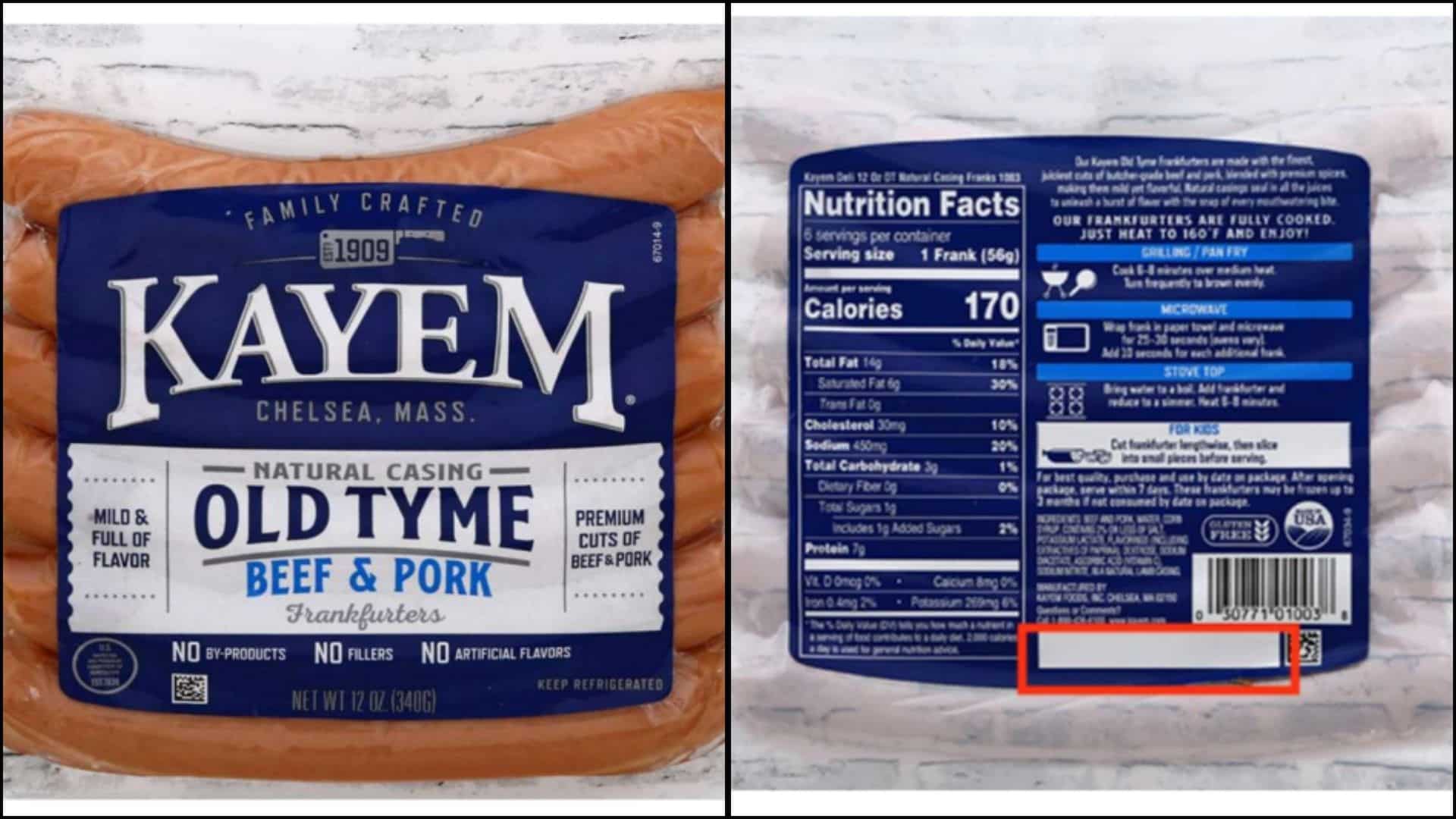
The recall stretches well beyond products labeled Kayem. Because the company manufactures and distributes meat and poultry under several names, consumers might not immediately connect a package of chicken sausage or deli ham to the same recall. The affected brands are Kayem, Genoa, Al Fresco, Triple M, McKenzie Country Classics, Deutschmacher, Jordan’s, Essem, and Winnisimmet.
The products span several grocery categories. Kayem-branded items include Old Tyme Franks, Fenway Franks, bacon, and bologna. Al Fresco products include chicken sausages in varieties such as Sweet Apple, Roasted Garlic, Spinach & Feta, and Sweet Italian Style. Other affected items include McKenzie Country Classics bacon and turkey breast, Triple M ham, Deutschmacher liverwurst, and Jordan’s frankfurters. The recall also covers certain products intended for foodservice customers, not just supermarket shoppers.
Distribution adds another layer of concern. According to FSIS, the affected products were shipped to retail and foodservice locations throughout the United States, as well as Hong Kong. The federal announcement does not identify every supermarket or restaurant that received them. That makes checking the packaging more useful than relying on where a product was purchased, particularly for shoppers who routinely buy deli meats, sausages, or bacon.
Check These UPC Codes Before Eating Anything

With so many products involved, identifying the recalled items requires more than checking the brand name. The USDA’s detailed product list includes UPC codes, lot numbers, expiration dates, and establishment numbers. Some products appear under numerous lot numbers, so a matching UPC alone does not necessarily establish that every package of that product is recalled.
Here are several examples of affected products and their unit UPC codes, as identified in the official recall list:
-
Kayem Old Tyme Franks, 12 oz. — UPC: 030771010038
-
Kayem Old Tyme Beef Franks, 12 oz. — UPC: 030771010427
-
Kayem Hot Dogs, 14 oz. — UPC: 030771011110
-
Kayem Fenway Franks, 14 oz. — UPC: 030771011141
-
Kayem Maplewood Thick Cut Bacon, 12 oz. — UPC: 030771014012
-
Al Fresco Roasted Garlic Chicken Sausage, 11 oz. — UPC: 030771026329
-
Al Fresco Spinach & Feta Chicken Sausage, 11 oz. — UPC: 030771026312
-
Al Fresco Sweet Apple Chicken Sausage, 11 oz. — UPC: 030771026374
These are only examples, not the complete recall list. Consumers can view the full list of affected products, UPC codes, lot numbers, and expiration dates here, along with official photographs of the recalled packaging here. Both resources are provided through the USDA’s recall announcement and offer a more reliable way to verify individual packages.
Another important identifier is the USDA establishment number, printed inside the inspection mark. The recalled products bear one of three numbers: EST. M/P 7839, EST. P 20935A, or EST. M 9520. Shoppers should compare the product name, UPC, lot number, and expiration date against the official list rather than assuming that every item carrying one of the nine brand names is affected.
What Shoppers Should Do With Recalled Meat
The USDA’s advice is straightforward: Do not eat the recalled products. Consumers who discover affected meat or poultry in their refrigerators should either throw it away or return it to the place of purchase. The guidance applies even when the packaging looks normal or the product has been kept refrigerated since purchase. The recall concerns temperature problems that occurred before the products reached consumers.
The absence of reported illnesses does not mean the recalled products are safe. FSIS has specifically warned that some could remain in household refrigerators, and the company’s detailed product list includes expiration dates extending beyond the October recall announcement. Consumers who believe they have become ill after eating an affected product should contact a healthcare provider. FSIS is also conducting recall effectiveness checks to help ensure businesses have been notified and affected products are removed from sale.
For questions about a specific package, consumers can contact Kayem Foods Customer Service at 1-800-426-6100, Monday through Friday, from 7:30 a.m. to 4 p.m. Eastern time, or email [email protected]. The USDA Meat and Poultry Hotline is also available at 888-674-6854. With nine brands, numerous production lots, and nationwide distribution involved, checking the official product list is the most dependable way to determine whether a package belongs in the refrigerator or needs to be discarded.