Nationwide Recall of a Popular Frozen Dessert Has FDA Warning People They Could Be Eating Stones, Not Nuts

Salted caramel and crunchy clusters sound like exactly the kind of textures you’d expect to find inside a frozen dessert. Small stones do not. That’s the concern behind a nationwide recall involving So Delicious Dairy Free Salted Caramel Cluster Non-Dairy Frozen Dessert, after complaints raised the possibility that some pints contain unwanted hard objects.
Danone USA announced the voluntary recall on Sept. 15, saying potentially affected pints may contain “small stones and other hard objects” within the product’s cashew inclusions. The company said the problem came to light through consumer complaints and that the Food and Drug Administration was informed of the recall. The FDA subsequently posted Danone’s announcement as a public service.
The recall is limited to one So Delicious product, but because the affected pints were distributed to retail stores across the United States, this is one worth checking before your next trip to the freezer. Danone says no other So Delicious Dairy Free flavors, codes or products are included.
Here’s Exactly What to Look for in Your Freezer
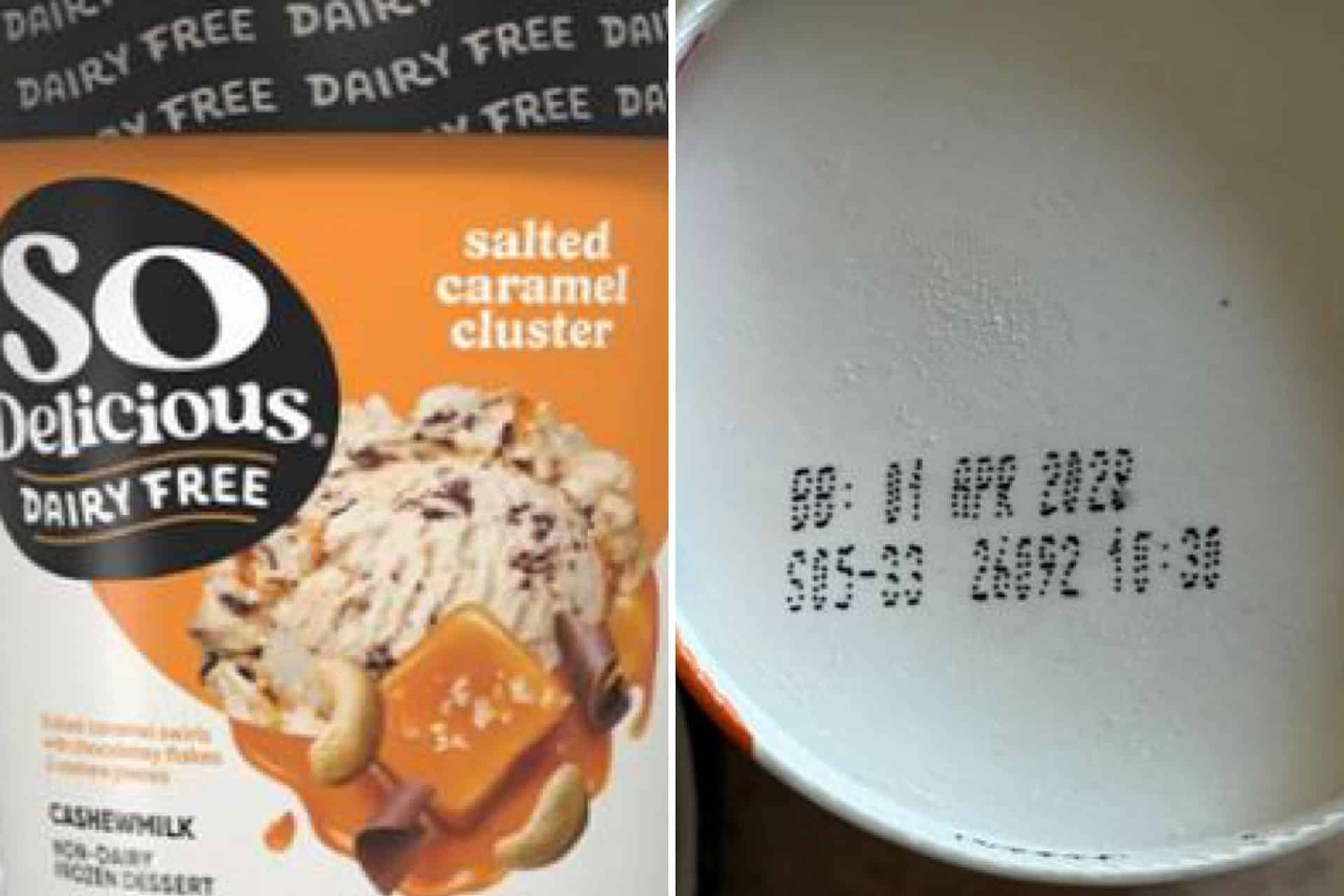
The affected product is So Delicious Dairy Free Salted Caramel Cluster Non-Dairy Frozen Dessert, sold in pint containers. According to the FDA announcement, recalled pints carry UPC 744473476138 and SKU 136603, with best-by dates on or before April 2028.
That date matters because the long shelf life of frozen desserts means an affected pint doesn’t necessarily have to be sitting in a supermarket freezer right now. Someone who bought one previously could still have it tucked behind other frozen foods at home. Danone says it is working with retailers to remove affected products from store shelves.
Consumers who find a recalled pint should not eat it. Danone advises throwing it away and says customers can request either a refund or a replacement coupon by contacting the So Delicious Dairy Free Consumer Care Line at 1-833-367-8975, Monday through Friday from 9 a.m. to 6 p.m. ET, or by contacting the company through its website.
How Do Stones End Up in Packaged Food?
The idea of finding a rock in a frozen dessert sounds bizarre, but foreign-object contamination is a recognized problem across food manufacturing. Food-safety authorities use terms such as “foreign” or “extraneous” material for unwanted objects ranging from pieces of metal and plastic to wood, stones and insects.
How those objects arrive can vary considerably. An Associated Press report on foreign-material recalls noted that plastic can come from damaged conveyor belts, wood fragments from produce pallets and metal from processing machinery. Rocks, sticks and insects can also travel with agricultural ingredients from fields into processing facilities. In the So Delicious recall, Danone specifically identified the potential foreign material as being within the cashew inclusions, although the supplied recall announcement does not explain precisely how it got there.
Manufacturers use technology including magnets, metal detectors and X-ray equipment to catch unwanted material, but detection isn’t foolproof. Colorado State University’s Keith Belk told the AP that technology for finding foreign objects has improved substantially, while acknowledging, “they’re going to miss things.” Previous recalls have involved everything from copper wire and glove fragments to pieces of golf balls.
The Good News: The Recall Is Narrowly Focused

A nationwide recall can sound sweeping, but this one shouldn’t be interpreted as applying to every So Delicious product in the freezer aisle. Danone explicitly says the action is confined to the Salted Caramel Cluster pints matching the affected dates and product information. Unaffected So Delicious products remain available, and the company says newly shipped product isn’t affected.
“We know this is not the quality you expect from us,” the brand said in a statement reported by ABC News. So Delicious said it had identified and corrected the issue and was working quickly with retail partners to get the affected pints off shelves before safely returning the product to market.
For shoppers, the takeaway is less complicated than the strange reason behind the recall: don’t assume that unexpected crunch in a Salted Caramel Cluster pint belongs there. Check the UPC and best-by date before digging in, and if your pint matches the recall information, leave the spoon in the drawer.