Your Grocery Bill Is Getting ‘Disrespectful’. Here’s What’s Driving Prices Higher


A grocery receipt that keeps climbing can make a normal shopping trip feel like a gut check. New federal data confirms that feeling has real numbers behind it. Government reports describe the trend as more than temporary sticker shock. Grocery prices sit roughly one third higher than they did seven years ago, and economists say a cooling inflation rate does not undo that increase. The cart people fill today already reflects a permanently different price level than the one they remember.
This article was created with the assistance of AI and reviewed by our editorial team for accuracy and clarity.
Government Data Puts a Precise Number on the Damage: 33 Percent

The scale of the increase becomes clear once the actual index numbers are laid out. The Bureau of Labor Statistics’ food-at-home Consumer Price Index reached 321.631 in June 2026, up 2.7 percent from the year before. Back in June 2019, that same index stood at 241.407. Comparing those two figures shows grocery costs have climbed roughly 33.2 percent over seven years, even as the pace of month-to-month increases has slowed considerably since the sharpest years.
One Financial Expert Says the Old Prices Are Simply Gone

Wall Street watchers describe this less as a temporary spike and more as a reset. “While inflation has cooled from its peak, grocery prices have not returned to where consumers remember them,” said Scott D. Martin, a partner at Kingsview Wealth Management. He added, “Food prices have effectively reset to a permanently higher level after years of supply chain disruptions, labor shortages, transportation costs, and broad inflationary pressures.”
Beef Is Driving the Sharpest Sticker Shock in the Store Right Now

Few grocery items highlight the pressure as clearly as beef. According to BLS retail data, 100 percent ground beef averaged $6.825 per pound nationally in June 2026, up 11.5 percent from $6.120 the year before. USDA figures show beef and veal prices running 11.8 percent higher than a year earlier, with the agency now projecting another 10.7 percent increase across all of 2026 as the pressure continues building at the register.
The Cattle Herd Has Shrunk to Its Smallest Size in 75 Years

Behind rising beef prices sits a genuine supply problem, not just demand. USDA reported the national cattle and calf inventory at 94.2 million head as of July 1, 2026, with beef cows specifically down 1 percent to 28.5 million. The agency also estimated this year’s calf crop at 32.5 million, down 2 percent from 2025. The Economic Research Service says the overall cattle herd has fallen to its lowest level in 75 years.
An Economist Points to Disease, Weather, and War as Root Causes
Douglas Holtz-Eakin, president of the American Action Forum, connected the beef shortage to a mix of agricultural and global pressures. “Grocery prices have gone up especially in 2021, but they have stayed high due to cattle disease and bad growing conditions,” he said. “The war in Ukraine hurt as well because it’s essentially the grain basket of the world.” That combination, he suggested, left few easy paths back to lower prices.
Not Every Aisle Is Getting More Expensive at the Same Rate

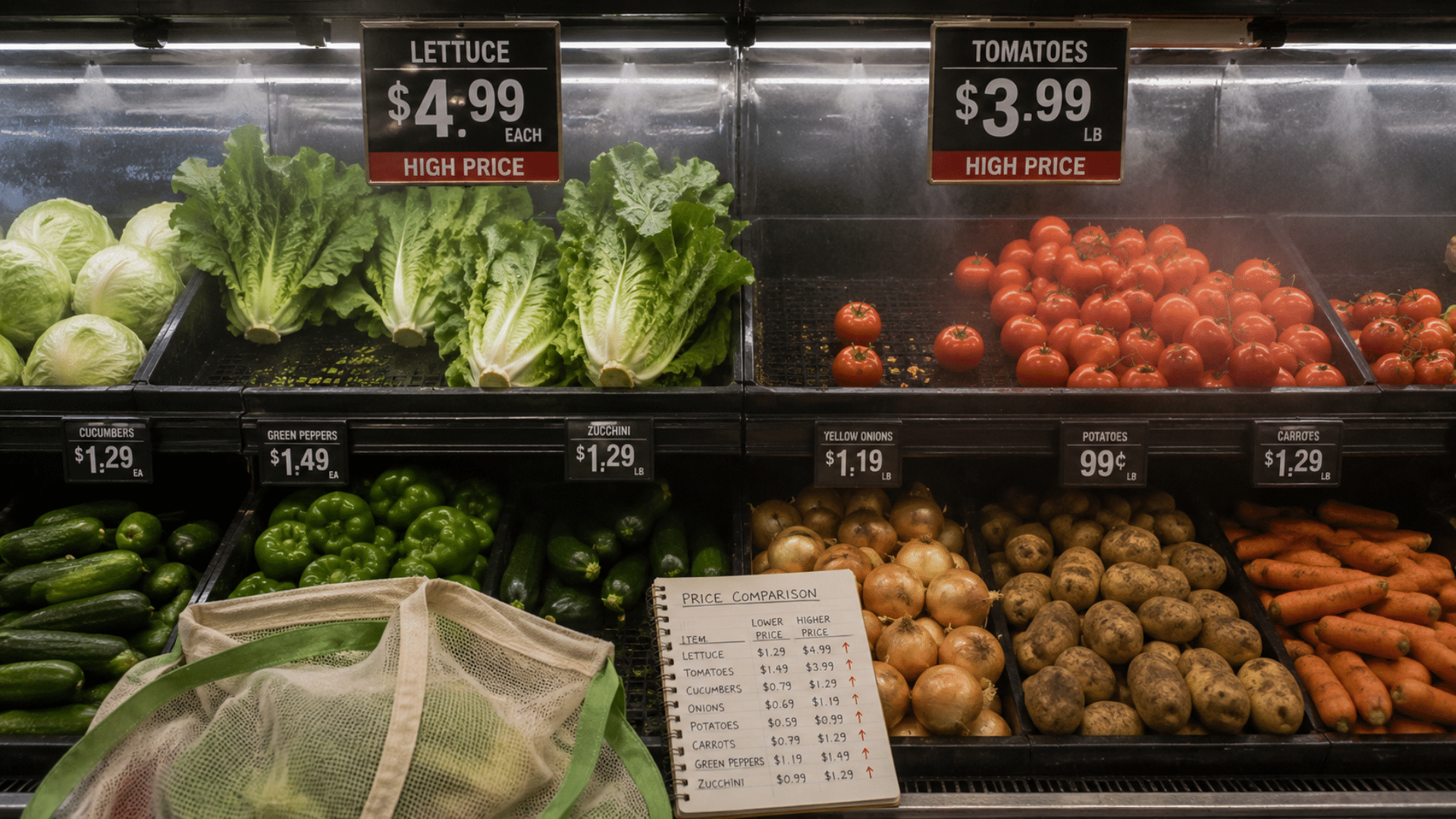
The pain is not spread evenly across the grocery store. Fresh vegetable prices ran 9.9 percent higher in June 2026 than a year earlier, with lettuce up 32.1 percent and tomatoes up 19.5 percent. Eggs told a completely different story: retail prices fell 27.9 percent compared to June 2025, with USDA projecting an even steeper 30.7 percent drop for the full year as production recovers from earlier bird flu outbreaks.
Shoppers Have Fundamentally Changed How They Buy Food

Consumer behavior has shifted alongside the prices themselves, according to Martin. “Households are increasingly purchasing private-label brands, comparing prices across multiple retailers, buying in bulk when discounts are available, and cutting back on discretionary food purchases,” he said. That adjustment is not limited to tighter budgets. “Even higher-income consumers have become far more price-conscious because groceries are one of the most visible household expenses,” Martin added.
Energy Costs Are Piling Even More Pressure Onto Food Prices

Grocery prices do not move in isolation from the rest of the economy. The same June Consumer Price Index report showed overall energy prices running 15.7 percent higher than a year earlier, with gasoline specifically up 26.7 percent. Higher fuel and energy costs ripple through transportation, production, and distribution, adding another layer of pressure onto food prices that is separate from, but connected to, agricultural supply problems.
USDA Isn’t Forecasting a Return to the Old Prices Anytime Soon

Relief does not appear to be arriving quickly, based on the government’s own projections. USDA’s July 2026 outlook expects overall food prices to rise another 3.1 percent this year, with food-at-home prices up 2.7 percent, and similar increases projected into 2027. The pace of increase may keep slowing, but slower growth still means higher totals. For millions of shoppers, the grocery budget they remember is simply not coming back.